🎙️ Episode 44 🇺🇸🔥 – Andrew Coffin | Reagan Ranch

Chopping It Up with Keith Saarloos · Released April 24, 2026 · Santa Ynez Valley, California
About this conversation
Andrew Coffin | The Reagan Ranch, Legacy, and Leadership That Still Speaks
Some places are visited.
Some places are remembered.
A very rare few… shape the people who shape the world.
This episode is about that place.
I sat down with Andrew Coffin for a conversation about a quiet ranch above the clouds—
and why it still matters today.
Andrew serves as Director of Rancho del Cielo, the place Ronald Reagan went to think, to work, and to become.
What unfolds isn’t a history lesson.
It’s a character study.
• 🏔️ The Ranch Above the Noise
What it feels like to arrive at a place designed for clarity—and why Reagan called it his “open cathedral.”
• 🛏️ A President, Simplified
An 1,800 sq ft home. No excess. No show. Just a life that matched the message.
• 🪵 Work as Reset
Clearing brush. Building fences. Physical labor as a way to think, decide, and lead.
• 📖 Faith, Stillness, Perspective
Why the ranch wasn’t an escape—it was where he prepared to go back into the storm.
• 🎓 Shaping the Next Generation
How Young America's Foundation is bringing students into that same space—and why it’s changing how they think.
• 🎤 The Open Microphone
Real debate. Real questions. No scripts. No shutdowns. Just ideas competing.
• 🇺🇸 Legacy vs. Image
What young people see when they walk into that house—and why it sticks.
This conversation is about something deeper than politics.
It’s about:
Character.
Clarity.
And the kind of leadership that doesn’t need an audience.
This isn’t nostalgia.
It’s perspective.
🎧 Listen now — Episode 44: Andrew Coffin | The Reagan Ranch
From Keith’s original Valley archive
The following material is preserved from the original episode post. Existing transcript text is an archive copy and may contain transcription errors.
Episode 44: Andrew Coffin, The Reagan Ranch, Rancho del Cielo, and the Leadership Legacy of Ronald Reagan
In Episode 44 of Chopping It Up with Keith Saarloos, Keith sits down with Andrew Coffin, Vice President of Young America’s Foundation and Director of the Reagan Ranch, for a conversation about Rancho del Cielo, Ronald Reagan’s beloved ranch in the mountains above Santa Barbara and the Santa Ynez Valley.
This episode explores the ranch Ronald Reagan called his “open cathedral,” a quiet 688-acre property where he cleared brush, built fences, rode horses, prayed, thought, and prepared to return to the pressures of national and world leadership.
Keith and Andrew discuss why Rancho del Cielo still matters today, not only as a presidential property, but as a living character study of Ronald Reagan himself. The modest 1,800-square-foot home, the difficult road to the top of the mountain, the hand-built fences, the Psalm 121 overlook, the ranch tools, the Western landscape, and the simplicity of the place all reveal something deeper than politics.
The conversation also explores Young America’s Foundation, the Reagan Ranch Center in Santa Barbara, student programs, open debate, conservative ideas, leadership formation, and the importance of giving young people access to real history, real places, and real conversations.
This is not just an episode about Ronald Reagan.
It is about character, clarity, faith, leadership, hard work, humility, patriotism, and the kind of legacy that still speaks.
Listen to the episode:
https://open.spotify.com/episode/3Xqa2pQyiPxZyvbBCyMyOy
-
Summery
In Episode 44 of Chopping It Up with Keith Saarloos, Keith sits down with Andrew Coffin, Vice President of Young America’s Foundation and Director of the Reagan Ranch, for a conversation about Ronald Reagan, Rancho del Cielo, the Santa Ynez Valley, American leadership, student formation, and the lasting power of place.
Andrew Coffin has spent decades helping preserve, protect, and interpret the Reagan Ranch. He serves as Vice President of Young America’s Foundation and Director of the Reagan Ranch Center. His work is tied directly to one of the most important presidential properties in the United States: Rancho del Cielo, Ronald Reagan’s ranch in the mountains above Santa Barbara, California.
Andrew Coffin:
https://yaf.org/people/andrew-coffin/
Young America’s Foundation:
Reagan Ranch Center:
https://yaf.org/reagan-ranch-center/
Rancho del Cielo is often called the Reagan Ranch or the Western White House. Located above the Santa Ynez Valley and Santa Barbara, the ranch was purchased by Ronald Reagan in 1974 while he was still Governor of California. Reagan loved the land immediately. The drive to the top is difficult, winding, and remote, but once visitors arrive, the property opens into a quiet mountain landscape that feels set apart from the world below.
Ronald Reagan and Rancho del Cielo:
https://www.reaganlibrary.gov/reagans/ronald-reagan/rancho-del-cielo
Keith and Andrew discuss the remarkable humility of the ranch house itself. For many people, the most surprising part of visiting Rancho del Cielo is not the view, the history, or the security infrastructure. It is the house. Ronald Reagan, the 40th President of the United States and leader of the free world, spent much of his private life in a home of roughly 1,800 square feet. It was not a mansion. It was not a palace. It was modest, simple, practical, and deeply personal.
Andrew explains that the original central portion of the home was built in 1872 by José Jesús Pico and that the Reagans made only modest changes to the property. There was no great show of wealth. No excess. No staged presidential grandeur. The house reflected the man. It was simple, useful, and authentic.
That authenticity becomes one of the central themes of the episode.
Keith and Andrew talk about how Ronald Reagan used the ranch not as an escape from responsibility, but as a place to prepare himself to return to it. Reagan rode horses, cleared brush, cut wood, maintained trails, and built fences from decommissioned telephone poles. He did not simply pose for photographs doing ranch work. He actually did the work.
This matters because it reveals something important about leadership. At Rancho del Cielo, Reagan was not performing an image. He was living a rhythm. Physical labor helped him think. The land helped him reset. The work helped him return to Washington with clarity.
Andrew describes conversations with Secret Service agents, military aides, family members, and others who saw Reagan in his most private moments. Their testimony reinforces the same point: there was no hidden version of Ronald Reagan that contradicted the public one. At the ranch, what people saw was what they got.
The conversation also focuses on the spiritual meaning of the ranch. Reagan often referred to Rancho del Cielo as his “open cathedral.” One of the most powerful locations on the ranch is the Psalm 121 overlook, named for the biblical passage Reagan quoted when asked why the ranch mattered so deeply to him. The ranch was a place of stillness, prayer, perspective, and gratitude.
Psalm 121:
https://www.biblegateway.com/passage/?search=Psalm%20121&version=KJV
Keith and Andrew discuss how the ranch connects directly to the Santa Ynez Valley. Ronald Reagan was not just a national figure who happened to own property in the area. He was woven into local life. He attended church in the valley, voted in Solvang, went to local restaurants, visited the movies, rode the land, and became part of the story of Santa Barbara County and the Santa Ynez Mountains.
The episode also highlights the Reagan Ranch Center in downtown Santa Barbara. The Reagan Ranch Center is operated by Young America’s Foundation and is located near the Santa Barbara train station at 217 State Street. It includes exhibits, artifacts, a section of the Berlin Wall, Reagan Ranch materials, presidential history, and educational programming connected to Ronald Reagan’s life and ideas.
Reagan Ranch Center:
https://yaf.org/reagan-ranch-center/
Ronald Reagan Presidential Library:
https://www.reaganlibrary.gov/
A major part of the conversation centers on Young America’s Foundation and its mission to bring students into contact with conservative ideas, American history, free enterprise, constitutional principles, leadership training, and open debate. Andrew explains that Young America’s Foundation has a long history connected to Ronald Reagan and continues to bring high school, college, and middle school students to programs at the Reagan Ranch and Reagan Ranch Center.
Young America’s Foundation Student Programs:
Reagan Ranch Events:
https://yaf.org/thereagan/reagan-ranch-events/
Keith and Andrew discuss why students respond so strongly to Rancho del Cielo. Many young people arrive knowing Ronald Reagan only as a historical name. But when they walk into the home, see the modest bedroom, stand beside the fences he built, visit the ranch roads he rode, and hear the stories of how he lived, they encounter something real. They see leadership without excess. Power without arrogance. Conviction without performance.
The episode also explores one of the most important parts of Young America’s Foundation programming: the open microphone. At YAF events, students are encouraged to ask questions, challenge speakers, think through ideas, and participate in real debate. Andrew explains that speakers are expected to leave time for questions because students need to learn how to engage ideas, not simply repeat slogans.
Keith and Andrew talk about how rare and necessary that is in modern culture. In an age of social media, algorithms, outrage, and quick reactions, young people need spaces where they can ask real questions, hear competing ideas, and learn how to think clearly.
YAF TV:
https://www.youtube.com/user/YAFTV
The conversation touches on the Berlin Wall, the Cold War, freedom, communism, fascism, liberty, and the importance of remembering history clearly. At the Reagan Ranch Center, visitors can see a section of the Berlin Wall, a physical reminder of the divide between freedom and oppression that shaped so much of Reagan’s presidency.
Ronald Reagan Berlin Wall Speech:
https://www.reaganlibrary.gov/archives/speech/remarks-brandenburg-gate-west-berlin
The episode also discusses cultural memory, patriotism, and the danger of forgetting what previous generations endured. Keith reflects on visiting Normandy, seeing the Berlin Wall, and understanding that freedom is not abstract. It is defended, preserved, and passed on.
More than anything, this episode is about legacy.
Not image.
Not nostalgia.
Not political marketing.
Legacy.
The kind of legacy found in a simple home, a hard day’s work, a quiet prayer, a fence post set by hand, and a leader who knew that clarity often comes when the noise is far below you.
Andrew Coffin’s work at the Reagan Ranch is not simply about preserving buildings or artifacts. It is about preserving lessons. Lessons about leadership, humility, faith, conviction, patriotism, free debate, and the responsibility of passing ideas to the next generation.
This conversation makes the case that Rancho del Cielo is one of the most important presidential sites in America, not because it is grand, but because it is true.
Listen to Episode 44:
https://open.spotify.com/episode/3Xqa2pQyiPxZyvbBCyMyOy
Chopping It Up Podcast Archive:
https://saarloosandsons.com/sscopod
Saarloos & Sons:
Related Links and Resources
Andrew Coffin, Vice President of Young America’s Foundation and Director of the Reagan Ranch Center
https://yaf.org/people/andrew-coffin/
Young America’s Foundation
Reagan Ranch Center
https://yaf.org/reagan-ranch-center/
Ronald Reagan and Rancho del Cielo
https://www.reaganlibrary.gov/reagans/ronald-reagan/rancho-del-cielo
Ronald Reagan Presidential Library
https://www.reaganlibrary.gov/
Young America’s Foundation Events
Reagan Ranch Events
https://yaf.org/thereagan/reagan-ranch-events/
YAF TV on YouTube
https://www.youtube.com/user/YAFTV
Ronald Reagan Berlin Wall Speech
https://www.reaganlibrary.gov/archives/speech/remarks-brandenburg-gate-west-berlin
Psalm 121
https://www.biblegateway.com/passage/?search=Psalm%20121&version=KJV
Chopping It Up Podcast Archive
https://saarloosandsons.com/sscopod
Saarloos & Sons
Listen to Episode 44 on Spotify
-
Topics Covered
Topics Covered
-
Andrew Coffin
-
Young America’s Foundation
-
Reagan Ranch Center
-
Rancho del Cielo
-
The Reagan Ranch
-
Ronald Reagan
-
Ronald Reagan’s Western White House
-
Ronald Reagan and the Santa Ynez Valley
-
Ronald Reagan in Santa Barbara County
-
Ronald Reagan Presidential Library
-
Ronald Reagan’s ranch house
-
Ronald Reagan’s 1,800-square-foot home
-
Ronald Reagan as Governor of California
-
Ronald Reagan as President of the United States
-
Rancho del Cielo history
-
Rancho del Cielo meaning
-
Ranch of the heavens
-
Ranch in the sky
-
Ronald Reagan’s open cathedral
-
Psalm 121 overlook
-
Ronald Reagan and faith
-
Ronald Reagan and prayer
-
Ronald Reagan and hard work
-
Ronald Reagan building fences
-
Ronald Reagan clearing brush
-
Ronald Reagan horseback riding
-
Secret Service at Rancho del Cielo
-
Air Force One and the Reagan Ranch
-
Reagan Ranch helipad
-
Reagan Ranch trails
-
Reagan Ranch landscape
-
Santa Ynez Mountains
-
Santa Ynez Valley history
-
Santa Barbara history
-
Presidential sites in California
-
Presidential homes
-
American presidential history
-
Mount Vernon
-
Monticello
-
Western White House
-
The Berlin Wall
-
Berlin Wall section in Santa Barbara
-
Ronald Reagan’s Berlin Wall speech
-
Tear down this wall
-
Cold War history
-
Freedom vs communism
-
American patriotism
-
American leadership
-
Conservative leadership
-
Conservative education
-
Conservative student programs
-
High school student leadership
-
College student leadership
-
Middle school student programs
-
Free marketplace of ideas
-
Open debate
-
Civil discourse
-
Student Q&A
-
Campus debate
-
Political ideas on college campuses
-
William F. Buckley Jr.
-
Young America’s Foundation history
-
YAF student conferences
-
Reagan Ranch student conferences
-
YAF TV
-
Leadership training
-
Character formation
-
Faith and leadership
-
Humility and leadership
-
Hard work and leadership
-
Authentic leadership
-
Legacy vs image
-
Social media and authenticity
-
Teaching young people to think
-
American history education
-
Preserving history
-
Presidential legacy
-
Reagan country
-
Chopping It Up with Keith Saarloos
-
Keith Saarloos
-
Saarloos & Sons
-
Santa Ynez Valley podcast
-
Santa Barbara podcast
-
California history podcast
-
Leadership podcast
-
Conservative podcast
-
American history podcast
-
-
FAQ
Frequently Asked Questions
Who is Andrew Coffin?
Andrew Coffin is Vice President of Young America’s Foundation and Director of the Reagan Ranch Center. He has spent decades working with Young America’s Foundation to preserve Rancho del Cielo, operate the Reagan Ranch Center, and support student programs connected to Ronald Reagan’s ideas and legacy.
Andrew Coffin:
https://yaf.org/people/andrew-coffin/
What is Rancho del Cielo?
Rancho del Cielo is Ronald Reagan’s former ranch in the mountains above Santa Barbara and the Santa Ynez Valley. It is often called the Reagan Ranch or the Western White House. Reagan purchased the property in 1974 and spent much of his private time there before, during, and after his presidency.
Ronald Reagan and Rancho del Cielo:
https://www.reaganlibrary.gov/reagans/ronald-reagan/rancho-del-cielo
What does Rancho del Cielo mean?
Rancho del Cielo is Spanish for “Ranch of the Heavens” or “Ranch in the Sky.” The name reflects the ranch’s location high in the Santa Ynez Mountains above Santa Barbara and the Santa Ynez Valley.
Where is the Reagan Ranch located?
The Reagan Ranch is located in the Santa Ynez Mountains above Santa Barbara, California. It sits above the Santa Ynez Valley and was Ronald Reagan’s private ranch and Western White House.
Can the public visit Rancho del Cielo?
Rancho del Cielo itself is preserved by Young America’s Foundation and is not generally open as a normal public tourist site. However, students, supporters, and guests may visit through Young America’s Foundation programs and special events.
Young America’s Foundation Events:
Reagan Ranch Events:
https://yaf.org/thereagan/reagan-ranch-events/
What is the Reagan Ranch Center?
The Reagan Ranch Center is a museum, educational center, and student program facility operated by Young America’s Foundation in downtown Santa Barbara. It is located at 217 State Street near the Santa Barbara train station and includes exhibits about Ronald Reagan, Rancho del Cielo, the Cold War, the Berlin Wall, and American leadership.
Reagan Ranch Center:
https://yaf.org/reagan-ranch-center/
Where is the Reagan Ranch Center located?
The Reagan Ranch Center is located at:
217 State Street
Santa Barbara, California 93101More information:
https://yaf.org/reagan-ranch-center/
What is Young America’s Foundation?
Young America’s Foundation, often called YAF, is a national conservative youth organization that provides student conferences, campus speakers, educational programs, leadership training, and resources for young people interested in conservative ideas, free enterprise, American history, constitutional principles, and public debate.
Young America’s Foundation:
How is Young America’s Foundation connected to Ronald Reagan?
Ronald Reagan had a long relationship with Young America’s Foundation. YAF later purchased and preserved Rancho del Cielo, Reagan’s beloved ranch, and now uses the property and Reagan Ranch Center to educate students about Reagan’s ideas, leadership, and legacy.
Young America’s Foundation and Ronald Reagan:
Why did Ronald Reagan love Rancho del Cielo?
Ronald Reagan loved Rancho del Cielo because it gave him space for reflection, prayer, physical work, horseback riding, and clarity. He called the ranch his “open cathedral” and used time there to restore himself before returning to the demands of public life.
What was Ronald Reagan’s home at Rancho del Cielo like?
Ronald Reagan’s ranch home was modest, simple, and roughly 1,800 square feet. It was not a mansion. It reflected Reagan’s personal humility and practical nature. The home included simple furnishings, modest rooms, and a private environment where Reagan and Nancy Reagan lived away from the public eye.
Did Ronald Reagan really build fences at the ranch?
Yes. Ronald Reagan spent time at Rancho del Cielo clearing brush, cutting wood, maintaining trails, riding horses, and building fences. Andrew Coffin explains in this episode that Reagan’s ranch work was not a staged photo opportunity. It was how he actually spent his time and how he restored his mind.
What is the Psalm 121 overlook?
The Psalm 121 overlook is a location at the Reagan Ranch associated with Reagan’s spiritual connection to the land. Reagan quoted Psalm 121 when asked why the ranch mattered to him: “I lift up mine eyes unto the hills, from whence cometh my help.”
Psalm 121:
https://www.biblegateway.com/passage/?search=Psalm%20121&version=KJV
Why did Ronald Reagan call the ranch his open cathedral?
Ronald Reagan called Rancho del Cielo his “open cathedral” because he experienced the ranch as a place of prayer, peace, gratitude, and spiritual renewal. The land, mountains, views, and quiet gave him perspective.
What does the Reagan Ranch teach students today?
The Reagan Ranch teaches students about leadership, humility, hard work, faith, character, patriotism, free enterprise, American history, and the importance of clear thinking. Young America’s Foundation uses the ranch as a living classroom for students.
What is the open microphone at Young America’s Foundation events?
At Young America’s Foundation events, speakers are expected to take questions from students. The open microphone allows students to ask real questions, challenge ideas, test arguments, and participate in civil debate.
Why is open debate important in this episode?
Keith Saarloos and Andrew Coffin discuss open debate as one of the most important parts of a healthy society. Instead of shutting down disagreement, students should learn how to ask questions, think clearly, listen, argue respectfully, and search for truth.
What is YAF TV?
YAF TV is Young America’s Foundation’s YouTube channel, where viewers can watch speeches, student events, interviews, debates, and educational content from YAF programs.
YAF TV:
https://www.youtube.com/user/YAFTV
What is the Berlin Wall exhibit at the Reagan Ranch Center?
The Reagan Ranch Center in Santa Barbara includes a large section of the Berlin Wall. It serves as a physical reminder of the Cold War, the divide between freedom and communism, and Ronald Reagan’s role in confronting Soviet power.
Ronald Reagan Berlin Wall Speech:
https://www.reaganlibrary.gov/archives/speech/remarks-brandenburg-gate-west-berlin
Why does the Berlin Wall matter in Ronald Reagan’s legacy?
The Berlin Wall became one of the most visible symbols of communist oppression during the Cold War. Reagan’s 1987 speech at the Brandenburg Gate, where he challenged Mikhail Gorbachev to “tear down this wall,” remains one of the defining moments of his presidency.
What is the Reagan Ranch’s connection to Santa Barbara?
The Reagan Ranch is located in the mountains above Santa Barbara, and the Reagan Ranch Center is located in downtown Santa Barbara. Ronald Reagan’s life at Rancho del Cielo connects Santa Barbara County directly to American presidential history.
What is the Reagan Ranch’s connection to the Santa Ynez Valley?
Rancho del Cielo overlooks the Santa Ynez Valley, and Ronald Reagan spent time in the valley during his years at the ranch. The ranch is part of the local history of Santa Barbara County, the Santa Ynez Mountains, and the communities below it.
Why is Rancho del Cielo compared to Mount Vernon and Monticello?
Rancho del Cielo is compared to Mount Vernon and Monticello because it reveals the private character of an American president. Like George Washington’s Mount Vernon and Thomas Jefferson’s Monticello, Reagan’s ranch helps people understand the man behind the office.
What is this episode of Chopping It Up about?
This episode is about Andrew Coffin, Young America’s Foundation, the Reagan Ranch, Rancho del Cielo, Ronald Reagan, leadership, student programs, free debate, faith, humility, patriotism, and the lasting legacy of a place that shaped one of America’s most important presidents.
Why should people listen to this episode?
People should listen to this episode because it explains why Rancho del Cielo still matters. It is not simply a ranch or a museum. It is a place that helps people understand Ronald Reagan’s character, leadership, faith, discipline, humility, and influence on future generations.
Where can I listen to Episode 44 with Andrew Coffin?
You can listen to Episode 44 of Chopping It Up with Keith Saarloos on Spotify here:
https://open.spotify.com/episode/3Xqa2pQyiPxZyvbBCyMyOy
Where can I find more Chopping It Up episodes?
You can find more episodes of Chopping It Up with Keith Saarloos here:
-
THE Transcript
Andrew Coffin, Reagan Ranch, Rancho del Cielo, Young America’s Foundation, YAF, Reagan Ranch Center, Ronald Reagan, Ronald Reagan ranch, Ronald Reagan Western White House, Ronald Reagan Santa Barbara, Ronald Reagan Santa Ynez Valley, Reagan Ranch Santa Barbara, Reagan Ranch Center Santa Barbara, Rancho del Cielo Santa Barbara, Rancho del Cielo Santa Ynez Mountains, Ronald Reagan open cathedral, Psalm 121 Ronald Reagan, Ronald Reagan faith, Ronald Reagan leadership, Reagan Ranch tours, Young America’s Foundation events, conservative student programs, YAF TV, Reagan Ranch student programs, Ronald Reagan Presidential Library, Berlin Wall Reagan Ranch Center, Ronald Reagan Berlin Wall speech, tear down this wall, Cold War history, American leadership, conservative education, free marketplace of ideas, open debate, student leadership, leadership training, presidential homes, presidential ranches, Mount Vernon, Monticello, California presidential history, Santa Barbara history, Santa Ynez Valley history, Chopping It Up with Keith Saarloos, Keith Saarloos, Saarloos & Sons.
0:00
Introducing Kevin Malone, Executive Chef at Mattie's Tavern
Hey everybody, it's a Saturday at 10 AM and so that means it is time for chopping it up on one O 5.9 Crazy country.
This is Keith Sarlos, your host, winemaker, farmer, manabout town.
Today we have a very special guest, someone that you may know, may not know, but a local nonetheless.
0:20
His name is Kevin Malone.
Good morning, Kevin.
How are you doing?
0:23
Speaker 2
I'm good, I'm doing good.
0:24
Speaker 1
So for the record, tell us about what you do in the Valley.
0:28
Speaker 2
I am the executive chef at Maddie's Tavern.
It's now an auberge hotel, right?
So we have 57 rooms, 67 rooms, and I run the kitchen and the Tavern, all the banquets.
0:44
We do between 40 and 50 weddings a year.
The coffee shop, Felix's and all the food to the rooms, the pool, everything.
0:53
Speaker 1
If you're eating it or drinking it, you got it from Kevin.
Yes.
0:56
Mattie's Tavern: The Living Room of the Valley
So Kevin, I wanted to have you on for a few different reasons.
One, if I rollback time, you know, 2025 years ago, even further, right, The in at Maddie's Tavern, the bar, the restaurant has had a incredible history.
You mean it's gone through a bunch of different hands.
1:13
I mean, it was a chart house at one point, but I have always thought that the bar at Maddie's Tavern is responsible for maybe 25% of the people who live in this valley.
They went there and they saw that vibe, right?
They saw even back when JC was running it, even to today, right?
1:31
You go it, you would go in there and you go there two times and then they're remembering your drink.
You know, it was a it was a gathering place.
It is the living room of the Valley.
Because as I like to think about it, you know, you need two things in a community to succeed.
1:47
You need a really great coffee shop and you need a really great pub.
And Maddie's Tavern for me has always been that in a few different ways.
Specifically the bar, because I remember going in there when it was dark and everything else and and the fire was rolling and there was even smoke in the room and the whole deal, right?
2:05
Speaker 2
Yeah, there's still smoke in the.
2:06
Speaker 1
Room.
There's still smoke in the room and we've had Logan on here talking about kind of old days at Maddie's.
But one of the things I wanted to do was kind of bring you up front from back, behind the behind the grill, you know, behind the the the pit and bring you out on front St. because you and I have become friends over the years.
2:23
And I have seen your rise from and, and jump in at any point from just working at Maddie's to being AI.
What I would like to consider a local that is the executive chef, Yeah.
2:37
Kevin Malone's Unexpected Path to Mattie's Tavern
How did you start?
What was your journey there?
2:40
Speaker 2
When I first started at Maddie's, I was working in LA kind of at a restaurant that for lack of a better explanation, I was kind of like too, too good to be at.
2:56
And I had a friend who had left who was working with me at that restaurant.
He left and started working at this crazy restaurant in LA called Inc.
And he he sent me an ad for a cooking, I don't remember if the ad was for like a sous chef or a line cook job.
3:14
And just like the description in the ad made Maddie sound so cool.
It sounded like culinary summer camp.
So I responded to the ad, came up and stayed in cabin one, which is now Oak.
Stayed there for a couple days and worked in the kitchen.
3:30
And I went from being like working in a place where I was the the only guy with the brain to being the worst one in the kitchen.
And immediately I was like, this is the spot I need to be.
So tried to surround myself with guys who are way better than me and.
3:44
Speaker 1
How many years ago was this?
3:46
Speaker 2
That was in 2015 I believe. 14 or 15 pre COVID?
Pre COVID when Charles Banks and Robbie Wilson owned the place and then.
4:01
Speaker 1
Which was an interesting era for the Maddie's.
4:03
Speaker 2
Tavern, yeah, I mean, it was I I like to describe it as we were a little too early for the valley.
Like the food was incredible.
The stuff we were doing in the kitchen was so cool and like, everything from scratch, everything local.
4:18
We were like butchering whole animals.
And the kitchen was brand new at the time.
And I just, I like, fell in love with the place.
It was so, so cool.
And I was there with Logan and me and Logan we're like quick friends and got really tight.
And yeah, it was just a little too early.
4:35
Everybody thought we were to LA.
But now, now all the restaurants are a lot similar to what we were doing then.
4:42
Speaker 1
Well, you know, skating where the puck is going is always different.
You know, if you're if you're true early, you're a martyr.
And if you're right on time, then all of a sudden you're like, hey, this is exactly what I want, right?
Yeah, totally.
You've done a lot of really interesting stuff there that I mean, specifically the burger and the like.
4:59
Crafting Mattie's Menu: Balancing Luxury and Local Authenticity
I'm, I'm a big bar guy, right?
It's like I love bars just in general.
And your burger is fantastic, man.
You have, as Logan says, you have a black belt in burgers.
5:09
Speaker 2
Yeah, I heard that that was pretty.
5:10
Speaker 1
Cool.
That's a pretty great line.
So tell us a little bit about the menu you got going on there.
5:14
Speaker 2
Right in the bar specifically, like that's, that's what I wanted.
I wanted to like hit all the the classic things that people look for when they go into a bar.
Chicken sandwich, a burger, you know, I got the steak frites back on there now, couple salads, but just, you know, that that heavy comfort stuff and just kind of do it really, really well.
5:34
Yeah, we were sort of missing that for a while when I first came back.
I came back in 2023 and Rhoda was there and she was doing really good considering like we're opening a restaurant and a hotel.
And when you're new at Maddie's, it's really hard to understand the the ownership that everyone in the Valley has for that place.
5:57
Speaker 1
I am so glad you brought that up because I think that's one of the things that is almost endemic of what Maddie's is like when I kind of brought up like how many people live in the valley just because of that living room setting or that pub setting or the bar setting at Maddie's, right?
6:14
They feel like they own it.
And, you know, even back when when they changed it a bunch and, and changed the bar and people like, immediately it felt like people were like, well, I'm not going there anymore.
And they just like cut it off a list.
But I thought what you guys have done so great over there and that whole team of like, really great people, you know, was you brought the old bar back and then all of a sudden it, it felt like going home.
6:35
Yeah.
6:36
Speaker 2
I I think that's, that's something that was a little missed when a Berish first came, you know, like they, it's this high luxury resort.
And the cool thing about Auberge is a lot of the properties are these like pre-existing old places and they kind of let them be themselves.
6:54
But having been closed for a while and, you know, going from Charles to Bryan and, and not really having too much going on in between the the like identity, culinary identity of the place was sort of missing.
So that was a, a big goal of mine when I took over last year was to get that back and find our, our lane and.
7:15
Speaker 1
That's exactly why you're here today because I think you've done an Absolutely Fabulous job of bringing back that ownership of like the community ownership back to a restaurant where they come in, they go, oh, this feels like the way it used to.
And you go in and bartenders kind of remember your drink and you'd like, you know, knew exactly the way you want it.
7:34
And it's like, oh, this, this is better than eating at home.
And I just wanted to commend you for that.
Well, thank you for seeing it.
I mean, and that's the part of you that I want to talk about even more 'cause I think one of the least interesting things about you is the fact that you're the head chef at Maddie's.
7:50
But I think you guys have done a great job as being a community location.
I mean, I didn't know much about Orbearish resorts.
That's not usually where me I personally stay, you know, just.
7:59
Speaker 2
As Me neither, yeah.
8:01
Speaker 1
But I've had the opportunity to go to a few 'cause when it became an orbearish, I went to a friend's wedding in Colorado and there was a a hotel that it's I'm.
8:12
Speaker 2
Going to blow it the Telluride one.
8:14
Speaker 1
No, the Aspen one.
8:15
Speaker 2
OK.
That's Jerome.
Jerome.
8:16
Speaker 1
And that's where Hunter S Thompson, you know, had his bar or that he would go to that bar every single day.
And when you go in there, you're like, oh, this feels more like a part of the community than it is a standard hotel where they build a hotel and it just looks like that hotel.
8:32
Totally.
Does that make sense?
Yeah, I've.
8:34
Speaker 2
I've worked for a few different hotel brands, like I, I worked at Rosewood in San Martin up by Gilroy and I worked at Four Seasons in Montecito and like, they're all great.
But that was one of the things that like, keeps me at Auberge is that like, we get to be our own little unique place where you're not just like a cookie cutter.
8:54
Oh, this is an Auberge.
8:56
Speaker 1
You know, and Hampton Inn looks like a Hampton Inn.
8:58
Speaker 2
Yeah, exactly.
And and you know, obviously I have like a really strong connection with Maddie's.
So it just turned out to be an auberge.
I only came back to the valley to be at Maddie's so.
9:08
Speaker 1
Did you really?
9:09
Speaker 2
Yes.
9:10
Speaker 1
So you chose that.
9:11
Speaker 2
Yes, I did.
9:13
Speaker 1
Well, then I think the ownership aspect of like you taking that over and going, no, I want to come back to this place because I could say this off to the side and nobody was listening.
So it's just me and you, which was, you know, the the pride that you do take in that place.
9:29
Like you kind of opened the door there a second ago, but you're like, no, I want to be the head chef at this restaurant.
And as someone who loves the restaurant and loves this community, that's exactly what you want from anybody.
It's like, no, no, no, this feels like my hometown and I want to be the head chef in my hometown.
9:47
And I think that's one of the things that you personify that it maybe you haven't been to Maddie's in a while.
Maybe definitely give it another shot and go get a burger, get a fried chicken sandwich, you know, go in the bar and feel it out again, 'cause I think you brought back that old feeling from 20 years ago with a little bit of a uptick in culinary and, and, and exploration and it feels like home.
10:12
And I think you've done a great job.
10:13
Speaker 2
Of that well, thank you.
That's that's where I, I want it to be.
I, I mean, obviously we have expectations being an auberish that are, you know, a little, a little higher than your local neighborhood bar and it's a really fine line to dance.
10:29
And that's what I'm constantly trying to do, figure out how I can have it be comfortable for people like you and, you know, other locals, but at the same time, like, keep that person who's spending a lot of money to be there all weekend, keep them happy and feel like they're getting value out of it.
10:43
Speaker 1
I think that's a really tough line to cross and you you do it really well where local feels welcome and somebody who's pretending to be local for the weekend.
I think it's a good way to because I.
10:53
Speaker 2
Fresh hat from Jed Liquors.
Fresh out rolling in, I don't.
10:57
Speaker 1
Know you could.
You could spot them a while away.
10:59
From Professional Skier to Rally Car Mechanic: Kevin's Diverse Passions
You're like, hey, it's on backwards, let's transition a little bit because like I said, you are an incredibly interesting person.
So professional skier at one point, is this correct?
11:10
Speaker 2
Yeah, my life revolved around skiing for a long time.
11:14
Speaker 1
Tell me stories man, because I have seen videos of you if you look, I mean if you look you up online right now on YouTube, there are videos of you backflipping highways, is that correct?
11:25
Speaker 2
Maybe I don't.
I don't look at them often, but there's some stuff floating around from the old.
11:30
Speaker 1
Days you were legit man.
11:31
Speaker 2
Yeah, I Yeah.
So right after high school, I.
11:35
Speaker 1
Where'd you go to high?
11:36
Speaker 2
School by then I went to high school in Massachusetts.
OK, So I grew up in western Massachusetts in a small town a lot like, you know, Los Alamos or Los Olivos, where I live now.
And I all as much as like, you know, you grow up in a small town in high school and stuff, you're like, man, I wish I was around more people.
11:53
And you know you want to, you want to go do something more interesting.
11:56
Speaker 1
Nobody wants to be where they are.
Yeah, totally.
11:58
Speaker 2
So as soon as high school was over, I I was really, really, really into skiing.
Like I I got into it around 1998, nineteen 99 and it just like I got the bug and fell in love with it and mammoth was like the place to be if you were hit and jumped on skis like that was the coolest place to be.
12:19
So it is the.
12:20
Speaker 1
Bleeding edge it still is.
12:21
Speaker 2
Yeah, it's the best.
So I I moved to Mammoth on a Greyhound bus, left Massachusetts on a Greyhound bus, took me 5 days with one of my best friends and I got crazy stories from the bus, but that would take all day.
And then we, yeah, we, we got to Reno, had some friends of friends pick us up and.
12:41
And then I ended up living there for about 12 or 13 years.
Really.
Yeah.
12:45
Speaker 1
Where'd you work in Rena?
Where'd you work in Mammoth?
12:48
Speaker 2
I cooked a little bit when I first got there.
Like cooking in me was a love hate thing for a long time.
My dad cooked and he he was always working three jobs when I was a kid and wasn't able to be around much.
But I picked it up from him.
So it was like he told me when I was a kid.
13:04
He's like, you'll never, you'll never be hungry if you're working in the kitchen and you'll, you know, you'll always have a job if you know how to cook.
So it was always the fall back gig.
So right when I got to Mammoth, I got a job as a janitor, which was pretty cool.
I didn't work until 4:00 at in the afternoon every day.
13:21
So I got to ski every single day and then quickly got out of that and got into the restaurants and was cooking a little bit.
But I wanted to be in a snow cat.
I thought that was the coolest thing there was.
It still is, yeah.
13:35
Speaker 1
It's heavy machinery is awesome.
It was cool.
Come on.
Yeah.
13:38
Speaker 2
So eventually I got myself into a snow cat and did that for a couple seasons working fleet, which is where you're just grooming the trails.
And then after two or three seasons I started building park.
So then I was working in the park, building jumps and setting up rails and stuff and.
13:54
Speaker 1
Were you running the dragon?
13:55
Speaker 2
No, no dragon.
OK, I was.
That's a deep.
13:57
Speaker 1
Cut for everybody's listing.
13:59
Speaker 2
To be totally honest, I was not super good in the Snow Cat but the boys liked having me around 'cause I hit all the jumps where none of them.
14:06
Speaker 1
You were building them for yourself.
14:07
Speaker 2
Yeah, none of them really did.
So the guys building the big jumps would ask me to come hop in the cat and tell them what I thought.
And yeah, so that was, that was cool.
That enabled me to keep skiing.
And yeah, I did that for a long, long time.
It was awesome.
14:22
Speaker 1
OK, so skiing we're going to get we're I'm going to, we're going to put this all together.
This is going to be a good story.
Another passion of yours is cars.
14:31
Speaker 2
Yep, so.
14:32
Speaker 1
Let's hear about it, because I know you just got back from something super awesome.
Tell me the whole.
14:36
Speaker 2
Story Yeah, I just went on a a three day rally in Parkfield.
What?
14:41
Speaker 1
Kind of cars specifically.
14:42
Speaker 2
I like 80s and 90s Audis and Volkswagens.
So I have a 1990 Golf GTI and a 1981 Rabbit pickup truck and I took the pickup truck on this rally and about two weeks before the rally started I found out my motor was blown in the truck.
15:03
So I was in a little bit of a time crunch the the GTI was definitely not going to be ready and as crazy as it sounds, it was easier for me to put in.
15:12
Speaker 1
A motor.
So all project cars, yeah.
15:14
Speaker 2
OK, they're it's it's a 30 or 40 year olds.
15:17
Speaker 1
Car.
No, no, it's always a project.
I know.
I'm just painting the picture for everybody who's listening at home.
15:21
Speaker 2
So yeah, I went and got a picked up a motor that a buddy had sitting in his garage for about a decade and every night after work started working on that motor and kind of halfway rebuilt it.
I didn't tear it open, but I replaced the all the maintenance stuff, cleaned it up, made it fresh, took all the good parts off my old one, put it on the new one, pulled the old one out of the car, put the new one in the car, And I got it ready at around noon on Wednesday and then left for the rally at 10 in the morning on Thursday.
15:55
Speaker 1
So OK, two things.
What time do you get off work?
15:58
Speaker 2
Between 9:30 and 10:00 at night, so.
16:02
Speaker 1
What time?
So what time in the morning were you working on this?
16:04
Speaker 2
We're doing like, I go home, do the little couch, chat with the missus every night and then hop in the garage.
Yeah, talking about the kids.
And then pretty much between 10:00 and 2:00 in the morning.
I was working on the car for two weeks to get it ready.
16:19
Speaker 1
OK, so you finished this thing.
How long was this rally?
16:23
Speaker 2
Probably about 1000 miles.
16:25
Speaker 1
1000 miles.
So you you wait, wait, wait.
You motor swapped your truck, finished it on a Wednesday.
Thursday started a rally for 1000 miles.
Yeah, in a Volkswagen.
16:38
Speaker 2
Rabbit pickup.
16:39
Speaker 1
Truck Rabbit pickup truck How many cars were on the rally?
16:42
Speaker 2
I think about 60 or 70.
16:45
Speaker 1
Pretty big rally though.
Yeah, cool.
We see, I mean, the cool part about being in the Valley, you can there's a lot of rallies that are coming through and all of a sudden you'll see like like 50 Datsuns or you'll see like, but when it's.
16:56
Speaker 2
Always 9 elevens.
There's just 1,000,009.
16:58
Speaker 1
Elevens 1,000,009 Elevens.
I always love the running of the bulls when all of a sudden you're sitting on 154 and, you know, mowing or something like that.
And then all of a sudden like 50 lambos just RIP through.
Yep.
And then I'm like, Oh my gosh, when Cash was a little kid, I we, we were sitting there and I think it was Pelican or quail.
17:16
Speaker 2
When all for the quail.
17:17
Speaker 1
For the quail.
So when everybody's driving up to Monterey and we were sitting on the corner and all these incredible supercars come by, right?
And then I'm not going to say his name, but this guy drove, drove by in a flatbed and was kind of in, in between all of them.
17:32
And I looked at Cash and I said, you want me to show you the guy who's got the most money in that line?
And he goes, yeah.
And I said it's the flatbed truck.
And he's like, really?
I'm like, 100%, man, just so you know, just so you know.
And he's like, oh, really?
I'm like, yeah, I go once for show, once for go.
I said the flatbeds for go.
17:48
Speaker 2
It's cool to see him driving.
It's those cars, you know, a lot of those guys just keep him in a heated garage and don't drive.
17:54
Speaker 1
I mean, if you die with a low odometer, you know you lost.
Yeah, that's the truth.
So where did the rally go?
18:00
Speaker 2
So it was in Parkfield.
We started in Cayucas and then drove out to Parkfield day one and stayed there.
So it was like a camping rally.
So we camped out at Parkfield Cafe.
If anybody doesn't know where Parkfield is, it's like 45 minutes east of Is it Santa Margarita up there just north of Paso?
18:20
Yeah.
And it's in the middle of nowhere.
There's like a population of 18.
It's this one family owns like 250,000 acres and it's super super.
18:27
Speaker 1
It's kind of like going to Gary.
Yeah, Yeah.
Like where's Gary?
Yeah, there he is.
18:32
Speaker 2
Very similar, yeah.
And then we just camped out there and just ripped back roads for three days and came back every night and hung out.
18:40
Speaker 1
That's fantastic.
18:41
Speaker 2
Yeah, it was super cool.
18:42
Speaker 1
OK, so.
18:44
Speaker 2
And car did great.
I had a couple things wiggle loose, you know, bolts it I needed to retorque but.
18:50
Speaker 1
If you can swap an engine in a in a week after work I'm I think you'll be fine.
18:55
Speaker 2
Yeah, it was all good.
Everything was good right at home.
18:58
Speaker 1
Skiing, cars.
19:00
Kevin Malone's 'All-In' Philosophy and Reclaiming Mattie's Soul
Anything else we should know about you?
What else are you passionate about?
I mean, your pet.
That's the.
I think that would be a great theme for you.
I mean, it's like the you don't do anything halfway.
Yeah, I.
19:10
Speaker 2
Go all in.
Usually you go all.
I like something.
19:12
Speaker 1
And and a perfectionist.
19:14
Speaker 2
I mean I have my kids, I love my kids.
I have twins, boy, girl twins that are about to be 4.
So between them, the car work and the wife, I don't even have much time for skiing anymore.
It's a pretty full life.
Yeah, pretty full.
19:28
Speaker 1
But I'd never see you without a smile on your face, so that's pretty good.
19:31
Speaker 2
Yeah, you just catch me on the good.
19:33
Speaker 1
Day.
That's true.
You put it on?
Yeah.
19:36
Speaker 2
I do try my best to get out and say hi to everybody in the.
19:38
Speaker 1
Restaurant so which I also think is a very, very smart move if you live in this valley.
Restaurants have been made and lost on the chef walking out and going.
How you doing?
Yeah, you know, it's like, oh, the chef knows who I am.
I'm coming back to this place, right.
19:54
Totally.
It is a that's a five star move as far as anybody.
19:57
Speaker 2
Goes.
I learned that from Drew Terp.
19:59
Speaker 1
Really.
20:00
Speaker 2
You know, I used to work with at Maddie's and then was the opening chef at Pico in Los Alamos.
That's that's something I learned from him.
He always made sure to go out and say hi to everybody.
20:10
Speaker 1
You are a local boy through and through, man.
So let me go back to food a little bit.
You brought up a a very nice humble brag, which I really appreciate.
You're like, I was too good for this restaurant, you know?
When did you catch the bug and how did you grab hold of you and what was your kind of process and and your progression?
20:29
Speaker 2
There was, it's a little wonky.
Like there was a point when I was in Mammoth and I wasn't really skiing anymore, but I was still there.
I wasn't really sure what I was doing.
Snow cats were cool, but I was never going to be like real life successful being in the snow cat.
20:45
Like I said, I wasn't very good at it, but it it was cool to kill the time and I didn't want to be one of those guys who was fifty with no knees, you know, renting an overpriced crappy apartment in Mammoth.
And I didn't want to be that guy.
And then my dad actually passed away on the East Coast.
21:01
Sorry to hear that.
And I.
21:02
Speaker 1
It's a it's a terrible club.
21:04
Speaker 2
Yeah, it's, you know, everybody, everybody's got to do it.
It's part of life.
You know, it is a terrible club.
So I was a little, I was a little shaken up when that happened.
I didn't really know what to do.
So I decided to just try to try out the cooking thing, see if I liked it.
21:19
And I moved to LA and ended up in this little, little restaurant in Malibu that isn't there anymore.
It was in Point Dune.
It was called Duck Dive.
21:27
Speaker 1
I actually know that restaurant, yeah.
21:29
Speaker 2
And there was a a good crew of guys in the kitchen, and we all just got really tight.
And I met one kid in there, Anthony Stagnaro, who's now actually the executive chef of another auberish property in Napa.
But we became really tight.
And just every day off we'd go cook and we'd practice what we wanted to do 'cause we were cooking other people's food.
21:50
Yeah.
And then, yeah, I just started to get good at it and hammered down and realized that this was like my my Ave. to be successful at something 'cause I was at that point 3031 and, you know, knew the clock was ticking.
22:07
So I I decided.
22:08
Speaker 1
You got dreams, got goals.
22:09
Speaker 2
Yeah, decided to just hammer down.
And then Maddie's is where it kind of all real, really changed.
I went from being a good cook to being a chef with the guys that were in that kitchen then.
22:21
Speaker 1
You know, you brought up kind of the, you know, Anthony Bourdain, God rest him, the kitchen confidential book that he read wrote great book, great book.
And one of the things I really enjoyed about that book when I read it a long, long time ago, which was, you know, the, the whole thought process of the kitchen is, is a pirate ship, right?
22:45
And it is people will either be lifers or it'll be just a job or you will feel the tools in your hand or this is what I took away from the book, right?
You feel the tools in your hand and say, I can, this is a weapon I can do something with.
And when you see passionate people find food, making that jump because I think one of the things about this valley just in general is if you're getting a bad meal in this valley, you're.
23:11
Speaker 2
You're.
23:12
Speaker 1
Blowing it, you know, between the brothers over at, at at Red Barn Clark up at full of life, you know, Pico, the the Barlacoa.
I mean, we have, we live in a town of or out, you know, we live in a town of 1000 people and there's two Michelin stars, which is a pretty unbelievable, right?
23:37
Every single restaurant in this valley, people are bringing a game, like a game, a game if even if at the top level.
And as you go through the people who are passionate about it really connect people.
And I think one of the themes of this show is community.
23:52
And community I think is so incredibly important where if you grow up in a place and you love your community, you give back.
And I see from your point of view and a lot of the other chefs that you know, Leonardo was awesome at it and still is where you'd like, Hey, how you doing?
24:08
You know, come to the table.
What are you doing?
Seeing what's happening everywhere around this industrial elites.
I mean, I'm just saying the things that are coming to mind.
But it was like you go in and when you sat down, somebody was like, I, I am going to wow you.
Like that's my job.
24:24
I I'm not you didn't come in for average.
You're not leaving with average.
We're going to we're going to bring the heat.
And I love the fact that Maddie's as a ownership of like a community, right?
And what you have done in the last How many years have you been head chef now?
24:42
Speaker 2
Just over a year, just since I took over.
Yeah, I've been back since September 2023, but I was chef to cuisine then and I took over as exec chef like last February 2025.
24:55
Speaker 1
And and I'm not disparaging anybody whatsoever, but when you got your hand on the wheel, something absolutely changed.
I mean, food wise, service wise, the level of expectation, the service, even to a certain level, the wouldn't how quickly food comes out, how good it is, how fresh it is, the ingredients that you're using, all of it.
25:18
I mean, just from me to you beginning to say this on the air honestly is like, oh wow, we, we've got one of us behind the behind the grill.
And I just wanted to say thank you for that.
25:28
Speaker 2
Because, well, thank you.
25:29
Speaker 1
I I hope, I hope, you know, that it is absolutely felt, or at least felt by me, right.
And I see the I see the effort that's going into it.
And it feels great to have a local kid, you know, kid, sorry, but like have one of us behind the back there, you know, making it for the community.
25:49
And I, I just wanted to say I really appreciated it.
Yeah.
Thank you.
What was that journey like for you?
25:54
Speaker 2
Well, as far as at Maddie's the second round here I.
25:58
Speaker 1
I mean, I, I know you gotta listen, I, I, I appreciate you gotta wear the corporate hat on this one, but.
26:05
Speaker 2
Well, I had actually been speaking to, like, as soon as Logan reached out to me and told me, you know, Auberge is coming in there and you should try and get a job, you should try and come back 'cause he, him and I talked a lot and he knew, he knew I always wanted to be at Maddie's and I wasn't gonna come back up here and work anywhere else.
26:23
Like no disrespect to any other restaurant, I just knew that I wanted to be in charge of Maddie.
26:28
Speaker 1
'S Hey, some people just want to wear a Yankees cap now I get it, I get.
26:31
Speaker 2
It I don't, I don't get the Yankees, but I know.
26:35
Speaker 1
I just recently became a Boston Red Sox fan because I know a guy who's pitching on the Red Sox, and I'm like, am I going to buy a Boston Red Sox hat?
Yeah, I'm in.
OK.
26:43
Speaker 2
All right, let's go.
So yeah, I came back.
I had been speaking to Rhoda before they had even opened, like when they just broke ground, you know, and I was doing my little burger thing that I was doing in LA and I was, that wasn't really for me.
27:00
And I was about to have the kids.
So I, I knew it was going to be time to come back up to the valley soon.
And then for whatever reason, it didn't really work out right then.
And then when I really did like exit my burger business, I was thinking about going to work with my friend Anthony at Stanley Ranch in Napa.
27:19
And he let me know that Rhoda was probably looking for chefs cuisine.
So I reached out to her and she said absolutely.
I came up to the tasting, got the job and came in and it was, you know, a business of that size.
27:35
There's always kinks to work out.
So I kind of felt like we were right when I got there. her and I were just trying to change the tires while the car was moving, you know, trying to figure it out, figure it out.
And meanwhile, I'm, I know that she's probably going to leave relatively soon.
27:50
It really wears you out opening a place like that.
It's hard Miles.
And she didn't have like a, a connection to the valley like I do.
So I was planning on filling in that spot when she left, but she left a little quicker than any of us had planned on.
28:05
So another guy came in from Napa and he was like dead set on doing everything the way he wanted to do it.
So I kind of got back burnered a little bit and just watched Tim not kill it.
28:21
I I guess would be the nice way to say it.
And yeah, we, we definitely had a little back and forth, me and that guy, but I knew he had an expiration date.
So even though I got pretty close to leaving a couple times in that period, I just wrote it out.
28:37
And then then he left and I had a meeting like, Hey, how do you feel about this?
And I was like, I'm already done.
I have a menu ready.
Like I was ready to go.
So did that.
I had to do a big tasting for her owners, some of the some of the big guys at the company and I think I made 160 something plates that night that were up from my new menu while we were running dinner service of our current menu.
29:07
So it was, yeah, it was a little chaotic.
I did have a buddy who came down from the Napa property that helped me out and he was like, I'm going to cook everything.
You're you're not going to have to cook.
You just go in the room and talk.
And then we got to hot courses and he was like, I need some help.
29:24
And we were, we were in it, but it was pretty cool.
Yeah, I kind of knocked it out of the park for the tasting.
And then and then we were rolling.
29:34
Supporting Local: Craftsmanship, Community, and Being Valley Strong
You know, everybody, this, this whole conversation that what we had today was, is I think it could be summed up by, you know, Kevin Malone is hungry and you're hungry for everything.
I mean, I've, I've known you a little while.
I've got to watch you work.
29:50
It doesn't seem, it seems like everything you do, you go all in.
I mean, moving across the country to, to pursue skiing, right.
And then doing what you got to do to, to succeed, You know, moving on from there to learning.
I mean, just anybody can swap out a car motor, just start there.
30:07
It means you know how know what to do with your hands and then get the job done.
And I am so happy that we have a place that we as a community love.
And back there in the kitchen is somebody who's working hard to feed his community.
30:25
And I just wanted to have you on just to kind of throw some flowers at you and, and put you in front of everybody and, and let, let everybody know, hey, back there, there's a local kid and he's going to do, do right by you.
So.
30:36
Speaker 2
Well, thank you.
30:37
Speaker 1
Thank you.
Appreciate it.
No, man, I I'm a I'm a big fan.
I'm cheering for you.
I hope you're here for.
I hope.
I hope your kids graduate from San Diego High School.
You know what I mean?
Yeah, I, I love the fact that no matter where you go in this valley, you can be fed, but it takes a very special place to feel connected to.
30:55
And if you're listening to this and you haven't been to Maddie's in a while, I would suggest, highly suggest that you go in, you get a burger and a beer, sit by the fire, put your feet up a little bit, stretch out and feel like you've been welcomed home.
31:10
And I think that's exactly what you're doing with every plate that you're pushing out there right now is you are absolutely welcoming a community back home and you're the right guy behind the grill, man.
Well, thank you.
I just wanted to say thank you very much.
I wanted to throw some flowers at you and.
31:25
Speaker 2
I appreciate it.
31:26
Speaker 1
Thank you everybody come come see you.
Hey everybody, this has been Keith Sarlos and you have been listening to chopping it up on one O 5.9 crazy country, one of the last independent radio stations in California.
Then I I can't say that more and more and more.
31:44
I've got to say it all the time, because in a world where corporatization and homogeny and aiming for the lowest common denominator seems to be happening more and more and more, you get to live in a valley where people really care about what they're doing.
32:02
They care about their craft, they care about their community, and they want to do right by it.
So if you see some litter out there, make sure you pick it up and put it into a trash can and spend a little bit time in the restaurant, spend a little bit time in the local grocery stores and coffee shops and wineries.
32:17
Support the locals.
I can't say that enough.
We live in a community.
Spend your money in the hood that support the radio advertisers here on Crazy Country.
Because without independent businesses, without independent people, without independent radio stations, everybody else gets to gets to decide what you listen to, what you eat and what you do.
32:41
And I think staying independent and staying Valley strong is something that we should all shoot for to leave a better environment for our kids and let them know that places like this still exists.
So Kevin, thanks for coming in today.
You've been listening to Crazy Country One O 5.9 back to your regularly scheduled programming.
Link to ashow and all info https://open.spotify.com/episode/3EMjMeRTa3wrZlYdfUNvUG
Your next listen
Explore the episode archive · Return to the listening room
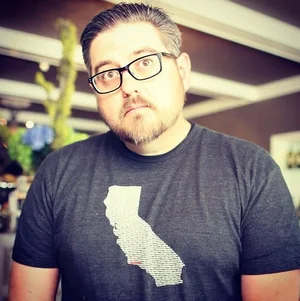
Saarloos + Sons archive host Keith Saarloos. Context photograph; not a portrait of the guest or a photograph of this recording.