Episode 45 🎙️🎓 Dr. Kimberly Sheehan | Santa Ynez Valley Union High School - “ Is The Total Package” Community High School California Should Try To Emulate

Chopping It Up with Keith Saarloos · Released April 29, 2026 · Santa Ynez Valley, California
About this conversation
If you’re a parent…
this is not optional listening.
Because everything you think you know about schools, kids, and “how things are these days”…
might not be the full story.
This week on Chopping It Up, Keith sits down with Dr. Kimberly Sheehan, Superintendent of Santa Ynez Valley Union High School—and what comes out of this conversation is something you don’t hear enough of:
Hope.
Not the fake kind.
Not the brochure version.
The real thing.
– A school where kids want to be
– Where 90% of students are involved in something bigger than themselves
– Where trades matter just as much as college
– Where accountability isn’t punishment—it’s preparation
– Where kids still say “yes sir” and “yes ma’am”
But here’s the part every parent needs to hear:
These kids are showing up.
They’re working.
They’re supporting each other.
They’re becoming the kind of people you hope your kids grow up to be.
And it’s not happening by accident.
It’s happening because a community decided to care…
and a school decided to lead.
In a world full of noise about what’s broken—
this is a story about what’s working.
If you have kids…
if you’re raising kids…
or if you care about the next generation—
👉 Press play.
From Keith’s original Valley archive
The following material is preserved from the original episode post. Existing transcript text is an archive copy and may contain transcription errors.
Episode 45: Dr. Kimberly Sheehan, Santa Ynez Valley High School, and Why Every Parent Needs to Hear This
In Episode 45 of Chopping It Up with Keith Saarloos, Keith sits down with Dr. Kimberly Sheehan, Superintendent of Santa Ynez Valley Union High School, for a conversation about education, community, leadership, and the future of the Santa Ynez Valley.
This is one of the most important episodes of Chopping It Up because it tackles a question every parent asks:
Are our kids going to be alright?
According to Dr. Sheehan, the answer is yes.
Not because things are easy.
Not because there aren't challenges.
But because there are still places where students are showing up, working hard, supporting one another, and becoming the kind of people every community hopes to produce.
Santa Ynez Valley Union High School is one of those places.
Throughout the conversation, Dr. Sheehan shares what makes the school unique and why she believes it is one of the best public high schools in California. From academics and athletics to agriculture, trades, arts, leadership programs, and community involvement, the school has become a model for what education can look like when students, parents, teachers, and the community all work together.
-
Summery
Episode 45: Dr. Kimberly Sheehan, Santa Ynez Valley High School, and Why Every Parent Needs to Hear This
In Episode 45 of Chopping It Up with Keith Saarloos, Keith sits down with Dr. Kimberly Sheehan, Superintendent of Santa Ynez Valley Union High School, for a conversation about education, community, leadership, and the future of the Santa Ynez Valley.
This is one of the most important episodes of Chopping It Up because it tackles a question every parent asks:
Are our kids going to be alright?
According to Dr. Sheehan, the answer is yes.
Not because things are easy.
Not because there aren't challenges.
But because there are still places where students are showing up, working hard, supporting one another, and becoming the kind of people every community hopes to produce.
Santa Ynez Valley Union High School is one of those places.
Throughout the conversation, Dr. Sheehan shares what makes the school unique and why she believes it is one of the best public high schools in California. From academics and athletics to agriculture, trades, arts, leadership programs, and community involvement, the school has become a model for what education can look like when students, parents, teachers, and the community all work together.
Keith and Dr. Sheehan discuss the culture that exists on campus today. Students still look adults in the eye. They hold doors open. They support their classmates. They attend football games, theater productions, concerts, club meetings, and athletic events. They understand that success is not a competition where one person's victory requires another person's loss.
Instead, students are learning that communities succeed when people support one another.
One of the most surprising parts of the conversation is hearing how involved students are outside the classroom. Nearly 90 percent of students participate in activities, athletics, clubs, agriculture, performing arts, leadership organizations, and other programs that help them build friendships, confidence, and life skills.
The episode also highlights the academic success of Santa Ynez Valley Union High School, including Advanced Placement coursework, Allan Hancock College dual enrollment opportunities, career technical education pathways, and the school's recognition as a California Distinguished School.
Dr. Sheehan explains that college is not the only path to success. Students interested in welding, agriculture, mechanics, hospitality, construction, health sciences, information technology, and other skilled trades are finding meaningful opportunities through the school's expanding career technical education programs.
The conversation also explores the school's no-phone classroom policy, which has dramatically increased student engagement, reduced distractions, and encouraged students to reconnect with one another face-to-face.
Perhaps most importantly, this episode is a reminder that a strong community starts with strong schools.
When a community invests in its students, those students grow into adults who invest back into their community.
That cycle is on full display at Santa Ynez Valley Union High School.
If you're a parent, grandparent, teacher, coach, business owner, or simply someone who cares about the future of the Santa Ynez Valley, this episode is worth your time.
Because in a world filled with stories about what's broken, this is a story about what's working.
About Dr. Kimberly SheehanDr. Kimberly Sheehan serves as Superintendent of Santa Ynez Valley Union High School District and has quickly become one of the most respected educational leaders in Santa Barbara County.
Since arriving in the Santa Ynez Valley, she has focused on strengthening academics, expanding student opportunities, increasing accountability, improving student engagement, supporting career technical education, and building stronger connections between the school and the broader community.
Her vision is simple:
Create a school where every student can find a place to belong, discover their strengths, and graduate prepared for college, careers, and life.
Learn more:
In Episode 45 of Chopping It Up, Keith Saarloos sits down with Dr. Kimberly Sheehan, Superintendent of Santa Ynez Valley Union High School District, to discuss education, student success, community leadership, and the future of public education in California.
Santa Ynez Valley Union High School serves students throughout the Santa Ynez Valley, including the communities of Santa Ynez, Solvang, Buellton, Los Olivos, Ballard, Los Alamos, and surrounding areas.
School Website:
District Website:
During the conversation, Dr. Sheehan explains why Santa Ynez Valley Union High School has become one of the highest-performing public high schools in Santa Barbara County and one of the schools recognized as a California Distinguished School.
California Distinguished Schools Program:
The discussion explores academics, athletics, agriculture, trades education, Advanced Placement coursework, Allan Hancock College dual enrollment opportunities, Career Technical Education pathways, student leadership programs, performing arts, robotics, school culture, community engagement, and workforce development.
One of the most remarkable statistics discussed during the episode is that nearly 90 percent of students participate in activities outside the classroom. Students are involved in athletics, Future Farmers of America programs, performing arts, leadership organizations, clubs, agricultural education, trades programs, and community service activities.
The conversation highlights several Career Technical Education pathways available to students, including agriculture, welding, automotive technology, hospitality, transportation, health sciences, business, media arts, and emerging technology fields.
Career Technical Education Information:
Dr. Sheehan also discusses partnerships with Allan Hancock College, allowing students to earn college credit while attending high school.
Allan Hancock College:
https://www.hancockcollege.edu
Keith and Dr. Sheehan spend significant time discussing the importance of community involvement and the role parents, teachers, coaches, alumni, local businesses, foundations, and volunteers play in creating a successful educational environment.
The episode also explores the school's no-phone classroom policy, student accountability programs, tutoring initiatives, and efforts to prepare students for college, careers, military service, entrepreneurship, and skilled trades.
Throughout the discussion, Dr. Sheehan emphasizes a philosophy centered on responsibility, participation, respect, and opportunity.
The result is a school culture where students are encouraged to become not only successful graduates, but engaged citizens and future leaders.
For parents considering a move to the Santa Ynez Valley, families researching schools in Santa Barbara County, or community members interested in the future of local education, this episode provides a detailed look at one of California's most unique and successful public high schools.
Listen to the full episode:
https://open.spotify.com/episode/45JNgWCAV6O1zjyePAU9S6
More Episodes:
-
Topics Covered
Topics Covered
Topics Covered in This Episode
-
Dr. Kimberly Sheehan
-
Santa Ynez Valley Union High School
-
Public education in California
-
Why parents should be optimistic about the future
-
Student leadership
-
Pirate Pride
-
Friday Night Football
-
California Distinguished Schools
-
Advanced Placement programs
-
Allan Hancock College dual enrollment
-
Agriculture education
-
Welding programs
-
Career Technical Education
-
Skilled trades education
-
Automotive programs
-
Hospitality and restaurant management
-
Arts and theater programs
-
Information technology education
-
AI and future workforce preparation
-
Student accountability
-
No-phone classroom policies
-
Community involvement
-
Building future leaders
-
Raising kids in the Santa Ynez Valley
-
Why strong schools create strong communities
-
-
FAQ
FAQ
Frequently Asked Questions
Who is Dr. Kimberly Sheehan?
Dr. Kimberly Sheehan is the Superintendent of Santa Ynez Valley Union High School District and the educational leader responsible for overseeing Santa Ynez Valley Union High School.
What is Santa Ynez Valley Union High School known for?
Santa Ynez Valley Union High School is known for strong academics, athletics, agriculture programs, career technical education, community involvement, student leadership, and a culture that emphasizes responsibility, respect, and participation.
Is Santa Ynez Valley Union High School a California Distinguished School?
Yes. Santa Ynez Valley Union High School was recognized as a California Distinguished School, placing it among the top-performing schools in California.
What percentage of students participate in activities outside the classroom?
According to Dr. Sheehan, approximately 90 percent of students participate in athletics, clubs, arts, agriculture programs, leadership organizations, or other extracurricular activities.
Does Santa Ynez Valley Union High School offer trade programs?
Yes. Students can participate in agriculture, welding, automotive technology, hospitality, health sciences, and other Career Technical Education pathways designed to prepare students for skilled trades and workforce opportunities.
Does the school support students planning to attend college?
Absolutely. Students have access to Advanced Placement courses, dual enrollment opportunities through Allan Hancock College, academic support programs, tutoring services, and college preparation resources.
What is the school's phone policy?
Students are expected to keep phones out of use during instructional time. The policy has increased engagement, improved classroom focus, and reduced distractions.
Why is community involvement so important at Santa Ynez Valley Union High School?
The school believes that students thrive when they feel connected to something larger than themselves. Athletics, clubs, arts programs, agriculture, leadership activities, and community events help students build meaningful relationships and lifelong skills.
Why did Keith Saarloos want to feature Dr. Sheehan on Chopping It Up?
Because a healthy high school is one of the strongest indicators of a healthy community. Keith wanted listeners to hear firsthand about the students, teachers, families, and leaders who are helping shape the future of the Santa Ynez Valley.
-
THE Transcript
0:00
Introducing Kevin Malone, Executive Chef at Mattie's Tavern
Hey everybody, it's a Saturday at 10 AM and so that means it is time for chopping it up on one O 5.9 Crazy country.
This is Keith Sarlos, your host, winemaker, farmer, manabout town.
Today we have a very special guest, someone that you may know, may not know, but a local nonetheless.
0:20
His name is Kevin Malone.
Good morning, Kevin.
How are you doing?
0:23
Speaker 2
I'm good, I'm doing good.
0:24
Speaker 1
So for the record, tell us about what you do in the Valley.
0:28
Speaker 2
I am the executive chef at Maddie's Tavern.
It's now an auberge hotel, right?
So we have 57 rooms, 67 rooms, and I run the kitchen and the Tavern, all the banquets.
0:44
We do between 40 and 50 weddings a year.
The coffee shop, Felix's and all the food to the rooms, the pool, everything.
0:53
Speaker 1
If you're eating it or drinking it, you got it from Kevin.
Yes.
0:56
Mattie's Tavern: The Living Room of the Valley
So Kevin, I wanted to have you on for a few different reasons.
One, if I rollback time, you know, 2025 years ago, even further, right, The in at Maddie's Tavern, the bar, the restaurant has had a incredible history.
You mean it's gone through a bunch of different hands.
1:13
I mean, it was a chart house at one point, but I have always thought that the bar at Maddie's Tavern is responsible for maybe 25% of the people who live in this valley.
They went there and they saw that vibe, right?
They saw even back when JC was running it, even to today, right?
1:31
You go it, you would go in there and you go there two times and then they're remembering your drink.
You know, it was a it was a gathering place.
It is the living room of the Valley.
Because as I like to think about it, you know, you need two things in a community to succeed.
1:47
You need a really great coffee shop and you need a really great pub.
And Maddie's Tavern for me has always been that in a few different ways.
Specifically the bar, because I remember going in there when it was dark and everything else and and the fire was rolling and there was even smoke in the room and the whole deal, right?
2:05
Speaker 2
Yeah, there's still smoke in the.
2:06
Speaker 1
Room.
There's still smoke in the room and we've had Logan on here talking about kind of old days at Maddie's.
But one of the things I wanted to do was kind of bring you up front from back, behind the behind the grill, you know, behind the the the pit and bring you out on front St. because you and I have become friends over the years.
2:23
And I have seen your rise from and, and jump in at any point from just working at Maddie's to being AI.
What I would like to consider a local that is the executive chef, Yeah.
2:37
Kevin Malone's Unexpected Path to Mattie's Tavern
How did you start?
What was your journey there?
2:40
Speaker 2
When I first started at Maddie's, I was working in LA kind of at a restaurant that for lack of a better explanation, I was kind of like too, too good to be at.
2:56
And I had a friend who had left who was working with me at that restaurant.
He left and started working at this crazy restaurant in LA called Inc.
And he he sent me an ad for a cooking, I don't remember if the ad was for like a sous chef or a line cook job.
3:14
And just like the description in the ad made Maddie sound so cool.
It sounded like culinary summer camp.
So I responded to the ad, came up and stayed in cabin one, which is now Oak.
Stayed there for a couple days and worked in the kitchen.
3:30
And I went from being like working in a place where I was the the only guy with the brain to being the worst one in the kitchen.
And immediately I was like, this is the spot I need to be.
So tried to surround myself with guys who are way better than me and.
3:44
Speaker 1
How many years ago was this?
3:46
Speaker 2
That was in 2015 I believe. 14 or 15 pre COVID?
Pre COVID when Charles Banks and Robbie Wilson owned the place and then.
4:01
Speaker 1
Which was an interesting era for the Maddie's.
4:03
Speaker 2
Tavern, yeah, I mean, it was I I like to describe it as we were a little too early for the valley.
Like the food was incredible.
The stuff we were doing in the kitchen was so cool and like, everything from scratch, everything local.
4:18
We were like butchering whole animals.
And the kitchen was brand new at the time.
And I just, I like, fell in love with the place.
It was so, so cool.
And I was there with Logan and me and Logan we're like quick friends and got really tight.
And yeah, it was just a little too early.
4:35
Everybody thought we were to LA.
But now, now all the restaurants are a lot similar to what we were doing then.
4:42
Speaker 1
Well, you know, skating where the puck is going is always different.
You know, if you're if you're true early, you're a martyr.
And if you're right on time, then all of a sudden you're like, hey, this is exactly what I want, right?
Yeah, totally.
You've done a lot of really interesting stuff there that I mean, specifically the burger and the like.
4:59
Crafting Mattie's Menu: Balancing Luxury and Local Authenticity
I'm, I'm a big bar guy, right?
It's like I love bars just in general.
And your burger is fantastic, man.
You have, as Logan says, you have a black belt in burgers.
5:09
Speaker 2
Yeah, I heard that that was pretty.
5:10
Speaker 1
Cool.
That's a pretty great line.
So tell us a little bit about the menu you got going on there.
5:14
Speaker 2
Right in the bar specifically, like that's, that's what I wanted.
I wanted to like hit all the the classic things that people look for when they go into a bar.
Chicken sandwich, a burger, you know, I got the steak frites back on there now, couple salads, but just, you know, that that heavy comfort stuff and just kind of do it really, really well.
5:34
Yeah, we were sort of missing that for a while when I first came back.
I came back in 2023 and Rhoda was there and she was doing really good considering like we're opening a restaurant and a hotel.
And when you're new at Maddie's, it's really hard to understand the the ownership that everyone in the Valley has for that place.
5:57
Speaker 1
I am so glad you brought that up because I think that's one of the things that is almost endemic of what Maddie's is like when I kind of brought up like how many people live in the valley just because of that living room setting or that pub setting or the bar setting at Maddie's, right?
6:14
They feel like they own it.
And, you know, even back when when they changed it a bunch and, and changed the bar and people like, immediately it felt like people were like, well, I'm not going there anymore.
And they just like cut it off a list.
But I thought what you guys have done so great over there and that whole team of like, really great people, you know, was you brought the old bar back and then all of a sudden it, it felt like going home.
6:35
Yeah.
6:36
Speaker 2
I I think that's, that's something that was a little missed when a Berish first came, you know, like they, it's this high luxury resort.
And the cool thing about Auberge is a lot of the properties are these like pre-existing old places and they kind of let them be themselves.
6:54
But having been closed for a while and, you know, going from Charles to Bryan and, and not really having too much going on in between the the like identity, culinary identity of the place was sort of missing.
So that was a, a big goal of mine when I took over last year was to get that back and find our, our lane and.
7:15
Speaker 1
That's exactly why you're here today because I think you've done an Absolutely Fabulous job of bringing back that ownership of like the community ownership back to a restaurant where they come in, they go, oh, this feels like the way it used to.
And you go in and bartenders kind of remember your drink and you'd like, you know, knew exactly the way you want it.
7:34
And it's like, oh, this, this is better than eating at home.
And I just wanted to commend you for that.
Well, thank you for seeing it.
I mean, and that's the part of you that I want to talk about even more 'cause I think one of the least interesting things about you is the fact that you're the head chef at Maddie's.
7:50
But I think you guys have done a great job as being a community location.
I mean, I didn't know much about Orbearish resorts.
That's not usually where me I personally stay, you know, just.
7:59
Speaker 2
As Me neither, yeah.
8:01
Speaker 1
But I've had the opportunity to go to a few 'cause when it became an orbearish, I went to a friend's wedding in Colorado and there was a a hotel that it's I'm.
8:12
Speaker 2
Going to blow it the Telluride one.
8:14
Speaker 1
No, the Aspen one.
8:15
Speaker 2
OK.
That's Jerome.
Jerome.
8:16
Speaker 1
And that's where Hunter S Thompson, you know, had his bar or that he would go to that bar every single day.
And when you go in there, you're like, oh, this feels more like a part of the community than it is a standard hotel where they build a hotel and it just looks like that hotel.
8:32
Totally.
Does that make sense?
Yeah, I've.
8:34
Speaker 2
I've worked for a few different hotel brands, like I, I worked at Rosewood in San Martin up by Gilroy and I worked at Four Seasons in Montecito and like, they're all great.
But that was one of the things that like, keeps me at Auberge is that like, we get to be our own little unique place where you're not just like a cookie cutter.
8:54
Oh, this is an Auberge.
8:56
Speaker 1
You know, and Hampton Inn looks like a Hampton Inn.
8:58
Speaker 2
Yeah, exactly.
And and you know, obviously I have like a really strong connection with Maddie's.
So it just turned out to be an auberge.
I only came back to the valley to be at Maddie's so.
9:08
Speaker 1
Did you really?
9:09
Speaker 2
Yes.
9:10
Speaker 1
So you chose that.
9:11
Speaker 2
Yes, I did.
9:13
Speaker 1
Well, then I think the ownership aspect of like you taking that over and going, no, I want to come back to this place because I could say this off to the side and nobody was listening.
So it's just me and you, which was, you know, the the pride that you do take in that place.
9:29
Like you kind of opened the door there a second ago, but you're like, no, I want to be the head chef at this restaurant.
And as someone who loves the restaurant and loves this community, that's exactly what you want from anybody.
It's like, no, no, no, this feels like my hometown and I want to be the head chef in my hometown.
9:47
And I think that's one of the things that you personify that it maybe you haven't been to Maddie's in a while.
Maybe definitely give it another shot and go get a burger, get a fried chicken sandwich, you know, go in the bar and feel it out again, 'cause I think you brought back that old feeling from 20 years ago with a little bit of a uptick in culinary and, and, and exploration and it feels like home.
10:12
And I think you've done a great job.
10:13
Speaker 2
Of that well, thank you.
That's that's where I, I want it to be.
I, I mean, obviously we have expectations being an auberish that are, you know, a little, a little higher than your local neighborhood bar and it's a really fine line to dance.
10:29
And that's what I'm constantly trying to do, figure out how I can have it be comfortable for people like you and, you know, other locals, but at the same time, like, keep that person who's spending a lot of money to be there all weekend, keep them happy and feel like they're getting value out of it.
10:43
Speaker 1
I think that's a really tough line to cross and you you do it really well where local feels welcome and somebody who's pretending to be local for the weekend.
I think it's a good way to because I.
10:53
Speaker 2
Fresh hat from Jed Liquors.
Fresh out rolling in, I don't.
10:57
Speaker 1
Know you could.
You could spot them a while away.
10:59
From Professional Skier to Rally Car Mechanic: Kevin's Diverse Passions
You're like, hey, it's on backwards, let's transition a little bit because like I said, you are an incredibly interesting person.
So professional skier at one point, is this correct?
11:10
Speaker 2
Yeah, my life revolved around skiing for a long time.
11:14
Speaker 1
Tell me stories man, because I have seen videos of you if you look, I mean if you look you up online right now on YouTube, there are videos of you backflipping highways, is that correct?
11:25
Speaker 2
Maybe I don't.
I don't look at them often, but there's some stuff floating around from the old.
11:30
Speaker 1
Days you were legit man.
11:31
Speaker 2
Yeah, I Yeah.
So right after high school, I.
11:35
Speaker 1
Where'd you go to high?
11:36
Speaker 2
School by then I went to high school in Massachusetts.
OK, So I grew up in western Massachusetts in a small town a lot like, you know, Los Alamos or Los Olivos, where I live now.
And I all as much as like, you know, you grow up in a small town in high school and stuff, you're like, man, I wish I was around more people.
11:53
And you know you want to, you want to go do something more interesting.
11:56
Speaker 1
Nobody wants to be where they are.
Yeah, totally.
11:58
Speaker 2
So as soon as high school was over, I I was really, really, really into skiing.
Like I I got into it around 1998, nineteen 99 and it just like I got the bug and fell in love with it and mammoth was like the place to be if you were hit and jumped on skis like that was the coolest place to be.
12:19
So it is the.
12:20
Speaker 1
Bleeding edge it still is.
12:21
Speaker 2
Yeah, it's the best.
So I I moved to Mammoth on a Greyhound bus, left Massachusetts on a Greyhound bus, took me 5 days with one of my best friends and I got crazy stories from the bus, but that would take all day.
And then we, yeah, we, we got to Reno, had some friends of friends pick us up and.
12:41
And then I ended up living there for about 12 or 13 years.
Really.
Yeah.
12:45
Speaker 1
Where'd you work in Rena?
Where'd you work in Mammoth?
12:48
Speaker 2
I cooked a little bit when I first got there.
Like cooking in me was a love hate thing for a long time.
My dad cooked and he he was always working three jobs when I was a kid and wasn't able to be around much.
But I picked it up from him.
So it was like he told me when I was a kid.
13:04
He's like, you'll never, you'll never be hungry if you're working in the kitchen and you'll, you know, you'll always have a job if you know how to cook.
So it was always the fall back gig.
So right when I got to Mammoth, I got a job as a janitor, which was pretty cool.
I didn't work until 4:00 at in the afternoon every day.
13:21
So I got to ski every single day and then quickly got out of that and got into the restaurants and was cooking a little bit.
But I wanted to be in a snow cat.
I thought that was the coolest thing there was.
It still is, yeah.
13:35
Speaker 1
It's heavy machinery is awesome.
It was cool.
Come on.
Yeah.
13:38
Speaker 2
So eventually I got myself into a snow cat and did that for a couple seasons working fleet, which is where you're just grooming the trails.
And then after two or three seasons I started building park.
So then I was working in the park, building jumps and setting up rails and stuff and.
13:54
Speaker 1
Were you running the dragon?
13:55
Speaker 2
No, no dragon.
OK, I was.
That's a deep.
13:57
Speaker 1
Cut for everybody's listing.
13:59
Speaker 2
To be totally honest, I was not super good in the Snow Cat but the boys liked having me around 'cause I hit all the jumps where none of them.
14:06
Speaker 1
You were building them for yourself.
14:07
Speaker 2
Yeah, none of them really did.
So the guys building the big jumps would ask me to come hop in the cat and tell them what I thought.
And yeah, so that was, that was cool.
That enabled me to keep skiing.
And yeah, I did that for a long, long time.
It was awesome.
14:22
Speaker 1
OK, so skiing we're going to get we're I'm going to, we're going to put this all together.
This is going to be a good story.
Another passion of yours is cars.
14:31
Speaker 2
Yep, so.
14:32
Speaker 1
Let's hear about it, because I know you just got back from something super awesome.
Tell me the whole.
14:36
Speaker 2
Story Yeah, I just went on a a three day rally in Parkfield.
What?
14:41
Speaker 1
Kind of cars specifically.
14:42
Speaker 2
I like 80s and 90s Audis and Volkswagens.
So I have a 1990 Golf GTI and a 1981 Rabbit pickup truck and I took the pickup truck on this rally and about two weeks before the rally started I found out my motor was blown in the truck.
15:03
So I was in a little bit of a time crunch the the GTI was definitely not going to be ready and as crazy as it sounds, it was easier for me to put in.
15:12
Speaker 1
A motor.
So all project cars, yeah.
15:14
Speaker 2
OK, they're it's it's a 30 or 40 year olds.
15:17
Speaker 1
Car.
No, no, it's always a project.
I know.
I'm just painting the picture for everybody who's listening at home.
15:21
Speaker 2
So yeah, I went and got a picked up a motor that a buddy had sitting in his garage for about a decade and every night after work started working on that motor and kind of halfway rebuilt it.
I didn't tear it open, but I replaced the all the maintenance stuff, cleaned it up, made it fresh, took all the good parts off my old one, put it on the new one, pulled the old one out of the car, put the new one in the car, And I got it ready at around noon on Wednesday and then left for the rally at 10 in the morning on Thursday.
15:55
Speaker 1
So OK, two things.
What time do you get off work?
15:58
Speaker 2
Between 9:30 and 10:00 at night, so.
16:02
Speaker 1
What time?
So what time in the morning were you working on this?
16:04
Speaker 2
We're doing like, I go home, do the little couch, chat with the missus every night and then hop in the garage.
Yeah, talking about the kids.
And then pretty much between 10:00 and 2:00 in the morning.
I was working on the car for two weeks to get it ready.
16:19
Speaker 1
OK, so you finished this thing.
How long was this rally?
16:23
Speaker 2
Probably about 1000 miles.
16:25
Speaker 1
1000 miles.
So you you wait, wait, wait.
You motor swapped your truck, finished it on a Wednesday.
Thursday started a rally for 1000 miles.
Yeah, in a Volkswagen.
16:38
Speaker 2
Rabbit pickup.
16:39
Speaker 1
Truck Rabbit pickup truck How many cars were on the rally?
16:42
Speaker 2
I think about 60 or 70.
16:45
Speaker 1
Pretty big rally though.
Yeah, cool.
We see, I mean, the cool part about being in the Valley, you can there's a lot of rallies that are coming through and all of a sudden you'll see like like 50 Datsuns or you'll see like, but when it's.
16:56
Speaker 2
Always 9 elevens.
There's just 1,000,009.
16:58
Speaker 1
Elevens 1,000,009 Elevens.
I always love the running of the bulls when all of a sudden you're sitting on 154 and, you know, mowing or something like that.
And then all of a sudden like 50 lambos just RIP through.
Yep.
And then I'm like, Oh my gosh, when Cash was a little kid, I we, we were sitting there and I think it was Pelican or quail.
17:16
Speaker 2
When all for the quail.
17:17
Speaker 1
For the quail.
So when everybody's driving up to Monterey and we were sitting on the corner and all these incredible supercars come by, right?
And then I'm not going to say his name, but this guy drove, drove by in a flatbed and was kind of in, in between all of them.
17:32
And I looked at Cash and I said, you want me to show you the guy who's got the most money in that line?
And he goes, yeah.
And I said it's the flatbed truck.
And he's like, really?
I'm like, 100%, man, just so you know, just so you know.
And he's like, oh, really?
I'm like, yeah, I go once for show, once for go.
I said the flatbeds for go.
17:48
Speaker 2
It's cool to see him driving.
It's those cars, you know, a lot of those guys just keep him in a heated garage and don't drive.
17:54
Speaker 1
I mean, if you die with a low odometer, you know you lost.
Yeah, that's the truth.
So where did the rally go?
18:00
Speaker 2
So it was in Parkfield.
We started in Cayucas and then drove out to Parkfield day one and stayed there.
So it was like a camping rally.
So we camped out at Parkfield Cafe.
If anybody doesn't know where Parkfield is, it's like 45 minutes east of Is it Santa Margarita up there just north of Paso?
18:20
Yeah.
And it's in the middle of nowhere.
There's like a population of 18.
It's this one family owns like 250,000 acres and it's super super.
18:27
Speaker 1
It's kind of like going to Gary.
Yeah, Yeah.
Like where's Gary?
Yeah, there he is.
18:32
Speaker 2
Very similar, yeah.
And then we just camped out there and just ripped back roads for three days and came back every night and hung out.
18:40
Speaker 1
That's fantastic.
18:41
Speaker 2
Yeah, it was super cool.
18:42
Speaker 1
OK, so.
18:44
Speaker 2
And car did great.
I had a couple things wiggle loose, you know, bolts it I needed to retorque but.
18:50
Speaker 1
If you can swap an engine in a in a week after work I'm I think you'll be fine.
18:55
Speaker 2
Yeah, it was all good.
Everything was good right at home.
18:58
Speaker 1
Skiing, cars.
19:00
Kevin Malone's 'All-In' Philosophy and Reclaiming Mattie's Soul
Anything else we should know about you?
What else are you passionate about?
I mean, your pet.
That's the.
I think that would be a great theme for you.
I mean, it's like the you don't do anything halfway.
Yeah, I.
19:10
Speaker 2
Go all in.
Usually you go all.
I like something.
19:12
Speaker 1
And and a perfectionist.
19:14
Speaker 2
I mean I have my kids, I love my kids.
I have twins, boy, girl twins that are about to be 4.
So between them, the car work and the wife, I don't even have much time for skiing anymore.
It's a pretty full life.
Yeah, pretty full.
19:28
Speaker 1
But I'd never see you without a smile on your face, so that's pretty good.
19:31
Speaker 2
Yeah, you just catch me on the good.
19:33
Speaker 1
Day.
That's true.
You put it on?
Yeah.
19:36
Speaker 2
I do try my best to get out and say hi to everybody in the.
19:38
Speaker 1
Restaurant so which I also think is a very, very smart move if you live in this valley.
Restaurants have been made and lost on the chef walking out and going.
How you doing?
Yeah, you know, it's like, oh, the chef knows who I am.
I'm coming back to this place, right.
19:54
Totally.
It is a that's a five star move as far as anybody.
19:57
Speaker 2
Goes.
I learned that from Drew Terp.
19:59
Speaker 1
Really.
20:00
Speaker 2
You know, I used to work with at Maddie's and then was the opening chef at Pico in Los Alamos.
That's that's something I learned from him.
He always made sure to go out and say hi to everybody.
20:10
Speaker 1
You are a local boy through and through, man.
So let me go back to food a little bit.
You brought up a a very nice humble brag, which I really appreciate.
You're like, I was too good for this restaurant, you know?
When did you catch the bug and how did you grab hold of you and what was your kind of process and and your progression?
20:29
Speaker 2
There was, it's a little wonky.
Like there was a point when I was in Mammoth and I wasn't really skiing anymore, but I was still there.
I wasn't really sure what I was doing.
Snow cats were cool, but I was never going to be like real life successful being in the snow cat.
20:45
Like I said, I wasn't very good at it, but it it was cool to kill the time and I didn't want to be one of those guys who was fifty with no knees, you know, renting an overpriced crappy apartment in Mammoth.
And I didn't want to be that guy.
And then my dad actually passed away on the East Coast.
21:01
Sorry to hear that.
And I.
21:02
Speaker 1
It's a it's a terrible club.
21:04
Speaker 2
Yeah, it's, you know, everybody, everybody's got to do it.
It's part of life.
You know, it is a terrible club.
So I was a little, I was a little shaken up when that happened.
I didn't really know what to do.
So I decided to just try to try out the cooking thing, see if I liked it.
21:19
And I moved to LA and ended up in this little, little restaurant in Malibu that isn't there anymore.
It was in Point Dune.
It was called Duck Dive.
21:27
Speaker 1
I actually know that restaurant, yeah.
21:29
Speaker 2
And there was a a good crew of guys in the kitchen, and we all just got really tight.
And I met one kid in there, Anthony Stagnaro, who's now actually the executive chef of another auberish property in Napa.
But we became really tight.
And just every day off we'd go cook and we'd practice what we wanted to do 'cause we were cooking other people's food.
21:50
Yeah.
And then, yeah, I just started to get good at it and hammered down and realized that this was like my my Ave. to be successful at something 'cause I was at that point 3031 and, you know, knew the clock was ticking.
22:07
So I I decided.
22:08
Speaker 1
You got dreams, got goals.
22:09
Speaker 2
Yeah, decided to just hammer down.
And then Maddie's is where it kind of all real, really changed.
I went from being a good cook to being a chef with the guys that were in that kitchen then.
22:21
Speaker 1
You know, you brought up kind of the, you know, Anthony Bourdain, God rest him, the kitchen confidential book that he read wrote great book, great book.
And one of the things I really enjoyed about that book when I read it a long, long time ago, which was, you know, the, the whole thought process of the kitchen is, is a pirate ship, right?
22:45
And it is people will either be lifers or it'll be just a job or you will feel the tools in your hand or this is what I took away from the book, right?
You feel the tools in your hand and say, I can, this is a weapon I can do something with.
And when you see passionate people find food, making that jump because I think one of the things about this valley just in general is if you're getting a bad meal in this valley, you're.
23:11
Speaker 2
You're.
23:12
Speaker 1
Blowing it, you know, between the brothers over at, at at Red Barn Clark up at full of life, you know, Pico, the the Barlacoa.
I mean, we have, we live in a town of or out, you know, we live in a town of 1000 people and there's two Michelin stars, which is a pretty unbelievable, right?
23:37
Every single restaurant in this valley, people are bringing a game, like a game, a game if even if at the top level.
And as you go through the people who are passionate about it really connect people.
And I think one of the themes of this show is community.
23:52
And community I think is so incredibly important where if you grow up in a place and you love your community, you give back.
And I see from your point of view and a lot of the other chefs that you know, Leonardo was awesome at it and still is where you'd like, Hey, how you doing?
24:08
You know, come to the table.
What are you doing?
Seeing what's happening everywhere around this industrial elites.
I mean, I'm just saying the things that are coming to mind.
But it was like you go in and when you sat down, somebody was like, I, I am going to wow you.
Like that's my job.
24:24
I I'm not you didn't come in for average.
You're not leaving with average.
We're going to we're going to bring the heat.
And I love the fact that Maddie's as a ownership of like a community, right?
And what you have done in the last How many years have you been head chef now?
24:42
Speaker 2
Just over a year, just since I took over.
Yeah, I've been back since September 2023, but I was chef to cuisine then and I took over as exec chef like last February 2025.
24:55
Speaker 1
And and I'm not disparaging anybody whatsoever, but when you got your hand on the wheel, something absolutely changed.
I mean, food wise, service wise, the level of expectation, the service, even to a certain level, the wouldn't how quickly food comes out, how good it is, how fresh it is, the ingredients that you're using, all of it.
25:18
I mean, just from me to you beginning to say this on the air honestly is like, oh wow, we, we've got one of us behind the behind the grill.
And I just wanted to say thank you for that.
25:28
Speaker 2
Because, well, thank you.
25:29
Speaker 1
I I hope, I hope, you know, that it is absolutely felt, or at least felt by me, right.
And I see the I see the effort that's going into it.
And it feels great to have a local kid, you know, kid, sorry, but like have one of us behind the back there, you know, making it for the community.
25:49
And I, I just wanted to say I really appreciated it.
Yeah.
Thank you.
What was that journey like for you?
25:54
Speaker 2
Well, as far as at Maddie's the second round here I.
25:58
Speaker 1
I mean, I, I know you gotta listen, I, I, I appreciate you gotta wear the corporate hat on this one, but.
26:05
Speaker 2
Well, I had actually been speaking to, like, as soon as Logan reached out to me and told me, you know, Auberge is coming in there and you should try and get a job, you should try and come back 'cause he, him and I talked a lot and he knew, he knew I always wanted to be at Maddie's and I wasn't gonna come back up here and work anywhere else.
26:23
Like no disrespect to any other restaurant, I just knew that I wanted to be in charge of Maddie.
26:28
Speaker 1
'S Hey, some people just want to wear a Yankees cap now I get it, I get.
26:31
Speaker 2
It I don't, I don't get the Yankees, but I know.
26:35
Speaker 1
I just recently became a Boston Red Sox fan because I know a guy who's pitching on the Red Sox, and I'm like, am I going to buy a Boston Red Sox hat?
Yeah, I'm in.
OK.
26:43
Speaker 2
All right, let's go.
So yeah, I came back.
I had been speaking to Rhoda before they had even opened, like when they just broke ground, you know, and I was doing my little burger thing that I was doing in LA and I was, that wasn't really for me.
27:00
And I was about to have the kids.
So I, I knew it was going to be time to come back up to the valley soon.
And then for whatever reason, it didn't really work out right then.
And then when I really did like exit my burger business, I was thinking about going to work with my friend Anthony at Stanley Ranch in Napa.
27:19
And he let me know that Rhoda was probably looking for chefs cuisine.
So I reached out to her and she said absolutely.
I came up to the tasting, got the job and came in and it was, you know, a business of that size.
27:35
There's always kinks to work out.
So I kind of felt like we were right when I got there. her and I were just trying to change the tires while the car was moving, you know, trying to figure it out, figure it out.
And meanwhile, I'm, I know that she's probably going to leave relatively soon.
27:50
It really wears you out opening a place like that.
It's hard Miles.
And she didn't have like a, a connection to the valley like I do.
So I was planning on filling in that spot when she left, but she left a little quicker than any of us had planned on.
28:05
So another guy came in from Napa and he was like dead set on doing everything the way he wanted to do it.
So I kind of got back burnered a little bit and just watched Tim not kill it.
28:21
I I guess would be the nice way to say it.
And yeah, we, we definitely had a little back and forth, me and that guy, but I knew he had an expiration date.
So even though I got pretty close to leaving a couple times in that period, I just wrote it out.
28:37
And then then he left and I had a meeting like, Hey, how do you feel about this?
And I was like, I'm already done.
I have a menu ready.
Like I was ready to go.
So did that.
I had to do a big tasting for her owners, some of the some of the big guys at the company and I think I made 160 something plates that night that were up from my new menu while we were running dinner service of our current menu.
29:07
So it was, yeah, it was a little chaotic.
I did have a buddy who came down from the Napa property that helped me out and he was like, I'm going to cook everything.
You're you're not going to have to cook.
You just go in the room and talk.
And then we got to hot courses and he was like, I need some help.
29:24
And we were, we were in it, but it was pretty cool.
Yeah, I kind of knocked it out of the park for the tasting.
And then and then we were rolling.
29:34
Supporting Local: Craftsmanship, Community, and Being Valley Strong
You know, everybody, this, this whole conversation that what we had today was, is I think it could be summed up by, you know, Kevin Malone is hungry and you're hungry for everything.
I mean, I've, I've known you a little while.
I've got to watch you work.
29:50
It doesn't seem, it seems like everything you do, you go all in.
I mean, moving across the country to, to pursue skiing, right.
And then doing what you got to do to, to succeed, You know, moving on from there to learning.
I mean, just anybody can swap out a car motor, just start there.
30:07
It means you know how know what to do with your hands and then get the job done.
And I am so happy that we have a place that we as a community love.
And back there in the kitchen is somebody who's working hard to feed his community.
30:25
And I just wanted to have you on just to kind of throw some flowers at you and, and put you in front of everybody and, and let, let everybody know, hey, back there, there's a local kid and he's going to do, do right by you.
So.
30:36
Speaker 2
Well, thank you.
30:37
Speaker 1
Thank you.
Appreciate it.
No, man, I I'm a I'm a big fan.
I'm cheering for you.
I hope you're here for.
I hope.
I hope your kids graduate from San Diego High School.
You know what I mean?
Yeah, I, I love the fact that no matter where you go in this valley, you can be fed, but it takes a very special place to feel connected to.
30:55
And if you're listening to this and you haven't been to Maddie's in a while, I would suggest, highly suggest that you go in, you get a burger and a beer, sit by the fire, put your feet up a little bit, stretch out and feel like you've been welcomed home.
31:10
And I think that's exactly what you're doing with every plate that you're pushing out there right now is you are absolutely welcoming a community back home and you're the right guy behind the grill, man.
Well, thank you.
I just wanted to say thank you very much.
I wanted to throw some flowers at you and.
31:25
Speaker 2
I appreciate it.
31:26
Speaker 1
Thank you everybody come come see you.
Hey everybody, this has been Keith Sarlos and you have been listening to chopping it up on one O 5.9 crazy country, one of the last independent radio stations in California.
Then I I can't say that more and more and more.
31:44
I've got to say it all the time, because in a world where corporatization and homogeny and aiming for the lowest common denominator seems to be happening more and more and more, you get to live in a valley where people really care about what they're doing.
32:02
They care about their craft, they care about their community, and they want to do right by it.
So if you see some litter out there, make sure you pick it up and put it into a trash can and spend a little bit time in the restaurant, spend a little bit time in the local grocery stores and coffee shops and wineries.
32:17
Support the locals.
I can't say that enough.
We live in a community.
Spend your money in the hood that support the radio advertisers here on Crazy Country.
Because without independent businesses, without independent people, without independent radio stations, everybody else gets to gets to decide what you listen to, what you eat and what you do.
32:41
And I think staying independent and staying Valley strong is something that we should all shoot for to leave a better environment for our kids and let them know that places like this still exists.
So Kevin, thanks for coming in today.
You've been listening to Crazy Country One O 5.9 back to your regularly scheduled programming.
Link to ashow and all info https://open.spotify.com/episode/3EMjMeRTa3wrZlYdfUNvUG
Your next listen
Explore the episode archive · Return to the listening room
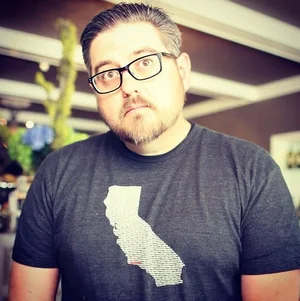
Saarloos + Sons archive host Keith Saarloos. Context photograph; not a portrait of the guest or a photograph of this recording.