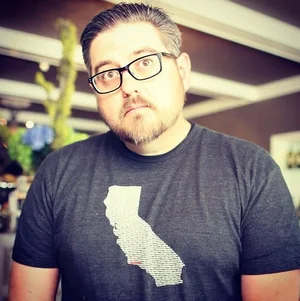
🍷 Episode 50 — Doug Margerum 🍷🇫🇷 The Wine Cask • Margerum Wine Company • Why Wine Matters More Than Ever

Chopping It Up with Keith Saarloos · Released June 12, 2026 · Santa Ynez Valley, California
About this conversation
Some conversations remind you why you fell in love with wine in the first place.
This is one of those conversations.
Before Santa Barbara County wine was cool...
Before tasting rooms lined the streets...
Before wine country became a destination...
There were a handful of people building something they weren't sure would work.
Doug Margerum was one of them.
In this episode, Doug tells the story of being a 14-year-old kid tasting wine in Châteauneuf-du-Pape and realizing that wine wasn't really about alcohol.
It was about connection.
It's about:
• The birth of The Wine Cask
• Santa Barbara wine before anyone cared
• Jim Clendenen, Bob Lindquist, and the pioneers
• Why wine is a memory machine
• Anthony Bourdain, Kitchen Confidential, and pirate ships
• The difference between making a living and building a life
• Why sitting around a table still matters
We talk about France.
We talk about food.
We talk about music.
We talk about community.
And we talk about why wine isn't really a beverage at all.
It's a vehicle for stories.
A bottle can take you back to a place.
A year.
A person.
A sunset.
A conversation.
And sometimes that's enough to change your life.
If you love Santa Barbara County...
If you love wine...
If you believe the best things in life happen around a table...
This episode is for you.
🎙️ Choppin' It Up — Doug Margerum
The show is free.
Please buy wine.
From Keith’s original Valley archive
The following material is preserved from the original episode post. Existing transcript text is an archive copy and may contain transcription errors.
Episode 50: Doug Margerum — The Story of Santa Barbara Wine
In Episode 50 of Choppin' It Up with Keith Saarloos, Keith sits down with Doug Margerum, founder of Margerum Wine Company, restaurateur, entrepreneur, and one of the most influential figures in the history of Santa Barbara County wine.
For more than four decades, Doug has helped shape the identity of the Santa Ynez Valley and Santa Barbara wine industry. From building award-winning restaurants and wine programs to producing world-class wines and promoting the region on a global stage, Doug has been at the center of Santa Barbara County's rise as one of the premier wine destinations in the world.
Keith and Doug discuss the early days of the Santa Ynez Valley wine industry, the pioneers who planted the first vineyards, the growth of Los Olivos and Santa Barbara wine tourism, and the people whose vision helped transform a rural agricultural community into an internationally recognized wine region.
The conversation explores entrepreneurship, hospitality, leadership, risk-taking, travel, food, wine, and the importance of creating memorable experiences. Doug shares stories from decades spent building businesses, working with winemakers, chefs, farmers, and hospitality professionals, while reflecting on the lessons learned along the way.
Listeners will gain insight into what makes Santa Barbara County wine unique, why the Santa Ynez Valley continues to attract talented winemakers and entrepreneurs, and how a commitment to quality, authenticity, and community has fueled the region's success.
Whether you're interested in California wine, Santa Barbara County wineries, entrepreneurship, hospitality, restaurants, travel, leadership, or the history of the Santa Ynez Valley, this episode provides a fascinating look at one of the individuals who helped put Santa Barbara wine on the world map.
-
Summery
In Episode 50 of Choppin' It Up with Keith Saarloos, Keith sits down with Doug Margerum, founder of Margerum Wine Company, longtime Santa Barbara restaurateur, winemaker, entrepreneur, and one of the most important voices in Santa Barbara County wine.
Doug's story begins long before he became a winemaker. As a teenager, a family trip to France introduced him to Châteauneuf-du-Pape, Rhône Valley wine, restaurants, and the idea that wine was more than a beverage. It was a way to remember a place, a meal, a person, and a moment in time.
From there, Doug's path led him to Santa Barbara, where he attended college, worked in restaurants, and eventually opened The Wine Cask in downtown Santa Barbara. The Wine Cask became one of the most important restaurants and wine destinations in California, helping introduce guests to world-class food, wine, hospitality, and the emerging wines of Santa Barbara County.
Keith and Doug discuss the early days of Santa Barbara wine, the influence of legends like Jim Clendenen of Au Bon Climat, Bob Lindquist of Qupé, Richard Sanford, Louis Lucas, and the pioneers who helped build the region from the ground up. The conversation explores how Santa Barbara County grew from a small agricultural region into one of the most respected wine regions in the world.
They also talk about why wine matters beyond the glass. Wine is memory. Wine is community. Wine is the thing that brings people to the table, softens conversations, marks important moments, and connects people to a specific year and place.
Doug shares stories from decades in restaurants, hospitality, wine collecting, winemaking, consulting, and leadership. Keith and Doug also discuss the Santa Barbara Vintners Foundation, the importance of giving back, the economic impact of wine in Santa Barbara County, and why the local wine industry supports far more than vineyards and tasting rooms.
This episode is for anyone interested in Santa Barbara County wine, Santa Ynez Valley wineries, Los Olivos wine tasting, Santa Barbara restaurants, California wine history, Rhône wines, hospitality, entrepreneurship, wine tourism, farming, food, and the people who helped shape one of America's great wine regions.
-
Topics Covered
-
Topics Covered
-
Who is Doug Margerum?
-
The history of Santa Barbara County wine
-
Santa Ynez Valley wine pioneers
-
Los Olivos wine country
-
Margerum Wine Company
-
Hospitality and restaurant management
-
Entrepreneurship and business leadership
-
Santa Barbara wine tourism
-
Building successful wine brands
-
The future of California wine
-
Travel, food, and wine culture
-
Leadership and community building
-
Lessons from decades in business
-
Why Santa Barbara County became a world-class wine region
-
-
-
THE Transcript
Everybody, it's 10 AM on a Saturday morning and you were listening to Chopping it Up with Keith Sarlos of Sarlos and Sons Little Wine Company right there in Los Olivos, CA today.
We have a very special guest with us today, a luminary in Santa Barbara County wine.
0:16
Someone with a really, really great story that I wanted to hear personally.
Welcome to the show, Doug Marjoram.
Well, thank you.
Please go on, tell me more.
How long have you been in?
I know wine isn't only is only a small part of your story.
0:32
How did how did your story in Santa Barbara County really begin?
Well, it my story of wine began before I even moved to Santa Barbara to go to college here.
Where'd you grow up?
I grew up in Los Angeles.
We kind of the weird thing was my parents took the kids on a on a European vacation when I was 14 years old and I was a mistake child.
0:57
So my brother and sister, as soon as we hit France, split.
And so I'm stuck with my parents, who I was not that fond of, nor were they that fond of me.
I had, you know, pimples and long hair and I wanted to be home with my friends.
But one of the first things we did, we went to this little town in, in, in the Rhone Valley called Chef de Nift de Pop, of course.
1:16
And we went into this winery and they was deep and dark.
And the wine maker started pulling wine out of barrels and giving it to me.
And I was tasting it and my parents.
And it was really amazing.
The space was amazing.
And I never had, what's it called alcohol.
1:35
And all of a sudden, all of a sudden I, I've liked my parents and they liked me and they let me chase wine that entire trip.
And so when I got back to my house in Woodland Hills, CA, I started collecting chef the nip to pop.
And how old were you?
1:50
I was 15 then.
And I'd go down with my wine to my, with my dad to Bend Dome Liquors and I'd buy wine.
I had a little wack rack in my room and the wines aged very quickly.
I love it.
And but then I was always the guy growing up and working in restaurants in high school and college that knew a little bit more about wine.
2:09
So I was always that wine guy.
And then in college, we, my roommate was a worked at high time and yeah, he'd bring home all the samples and you know, we were, we were playing poker and playing games and stuff.
Then we stopped doing that, started just tasting wine and reading about it.
2:24
And we were really into wine and, and the restaurants.
I was either cooking or or serving or managing at restaurants all through high school and college.
And then when I graduated from college with a degree in ABA in economics, I was unemployable.
And it was during a recession.
2:41
And I convinced my father that we should open a wine bar and the second wine bar in the western United States.
And this was mainly sorry.
Just to back up a little bit, my senior year of high school, we had a big house with two empty bedrooms because my brother and sister were gone and they had exchange students.
3:01
And my senior year at high school, we had a French college student come and stay in our house.
And yeah, so every summer after that, I went and visited her in France and we were very much in love.
And, and she lived in Paris and we went out to all the restaurants in Paris for lunch and dinner.
3:19
And then we went to her aunt had a place down in Laciotat in the South of France, and we went down there and I'm, I'm 18 years old.
This is a movie.
Yeah, I, I'm, we're going to Domaine Tom Pierre and drinking rose and picnicking in the vineyard.
And, you know, I really did at the time, I just didn't even realize how incredibly special it was.
3:38
And but it was and I learned a lot about wine.
I loved wine.
And, and, and so we went to these wine bars and I it was a concept that was sort of no one had done in, in, in America.
There was the London Wine Bar in San Francisco, which we visited to sort of do some Recon, and then we started this wine bar called the Wine Cask, right next to the Wine Cask Wine Shop, and it was not successful right off the bat.
4:07
This is the, I know you'd know math, and I know math people would come in and go $10.00 for a glass of wine.
Are you out of your mind?
And I said, well, what if I gave you a bottle for $40?
Would you buy that?
Oh, yeah, no problem.
What if I gave you 1/4 of that bottle for $10 by the glass?
4:25
Like, oh, that's insane.
That's way too much to pay for.
Of course.
I mean, it's like you can't even do the math.
But we're trying to introduce this concept.
You could come in and you could have a, you know, little plate of oysters with a glass of champagne.
And you could have a steak fried with a glass of Bordeaux.
4:40
And then you could have some Creme brulee with a little bit of Saturn.
And you don't have to buy 3 bottles, but you could have a really great one food experience.
And it was a it was a tough sell.
I used to have my parents come sit in the front window and, and people would walk by and go, oh look, there's people in there.
It was, it was not that successful until Barbara Fairchild wrote an article in Bon Appetit magazine and the rest was history.
5:04
The restaurant never looked back and she her article explaining what an incredibly unique and wonderful experience it was to come to the place where I was doing the cooking and also the serving that literally it was just a we had.
We had a 40 seats inside and about 12 outside.
5:22
And it was just in this little place in El Paseo downtown.
And it just took off and and sort of the rest is history.
But the really the rest is history part is one of the first people to walk through the door when I opened the little wine bar was Jim Clendenon from Obon Clema and then Bob Lindquist, of course was was.
5:41
Their.
Luminaries and I started buying their wine and then we, we all became incredibly fast friends and traveled all over the world together.
And I was the best man at Jim's wedding.
We started.
Jim Bob and I started our own company in 1986.
5:59
Yeah, I was 12.
Yeah, 1986.
And we started making wine together and then Jim bought me out in 1998 and I started Margot Wine Company in 2000 and in 2001.
You covered a lot of ground.
6:16
I loved it.
I mean, the beautiful, The beautiful part of what I just heard from you is quite honestly, I'm taking a deep breath as somebody who's in this industry is the very best part of wine.
You know, when you were talking about your parents and drinking wine and all of a sudden you like them, right?
6:33
I've always thought about wine is wine is a lubricant for community and when you open a good bottle of wine, you want to share it with someone.
It's like a good book that you hand to someone to go, Oh my gosh, I love this book.
Please read it or putting on a record and go, I love this song.
Please enjoy this with me.
6:48
You're, you're, you're I, I do this at wine maker dinners a lot.
I know you do a lot of these dinners where you're you have 50 or 60 people doing a set menu with wine and these people are all sitting at tables together.
They don't know each other.
And I said if only entire America could sit down and have a meal.
7:06
Our problems would be solved.
We would not have this discourse and this problem we have in of people not you compromise at the table, you like each other at the table, you talk reasonably.
I love the table.
It's one of my favorite places to be.
I love sitting at a table drinking wine, having, having food, enjoying friends, meeting new people.
7:24
It's just a great, great place.
I That's one of the greatest things I miss about Anthony Bourdain because he would go anywhere and he would be sitting with someone who was quote, UN quote our enemy.
And then you would go to someone's home and, and sit there and then and watch their guard come down.
Food and wine would come to the table.
7:40
And then their kids would come and run and jump on their lap.
And then all of a sudden you realize, wait a minute, this is just an this is just a different human being that lives on a different part of the planet.
Why would I hate this person?
I love this.
Person right?
It's interesting Bourdain, my son, who's now he just turned 29, was reading the they they re released Kitchen Confidential fantastic book, which is fantastic book.
8:04
And I read it as a young restaurateur and I just, you know, I loved it.
How to be a pirate?
Exactly what the pirate ship was exactly how we ran it and he but right before he he died, he re released the book with these big wide margins and wrote in the margins.
8:20
Got to rebuy it.
Things like Erica repair is not an asshole.
He's actually one of the best chefs in America.
I was wrong about about Emeril Lagasse.
He's foods incredible.
He he wrote all these things.
I was drunk when I wrote this, right?
And, and then so I reread Kitchen Confidential just recently with those notes.
8:40
And when I first read it, I didn't know what he sounded like because I'd never seen him on the radio.
Or now you read in his.
Voice, his voice was in my head.
I'm telling you, Keith, you got it.
If you love that book as much as I did, it's time for a reread, especially if you get this edition with the with the notes and the margin.
8:55
Spectacular right after.
This, I'm going to go do that back to the, the food and wine.
One of the things I've thought throughout my life in this conversation is so empowering because you know, a lot of, a lot of things are said about wine industry specifically right now.
9:12
And, and one of the things I, I'm a farmer first.
I'm, you know, we make wine 2nd.
And as a farmer, I'm an optimist.
I have to be because if you're not an optimist as a farmer, you probably won't be a farmer much longer.
One of the things I continuously talk to people about, and you seem like just the right person to have this conversation with, where when people think about wine as a beverage, they're missing 99% of the point.
9:37
I don't know if I said that first or Matt Kaner, who I know worked for you for a while and a good friend of mine and I love Matt.
I love that line because if it's a beverage, then you're not talking about a place.
You're not talking about you being 15 years old and, and drinking wine out of a barrel with, with your family.
9:56
And all of a sudden you liked your parents, right?
Or you're you're not sitting somewhere on a tailgate of a truck drinking the best bottle of wine you've ever had watching the sunset.
Yeah, it makes it has it, it delivers all the senses.
And so I think that the memories you have from wine are, are incredible.
10:12
And I, I love the French, you know, they don't their, their wine doesn't say product of France.
It says produce of France.
And it, it, it comes from a place.
And, and I think that's really, really important.
If I could just tell one, please.
Just quick, funny little story.
When I had the wine shop direct next door to the restaurant, the wine cast, this woman came in and she asked for a bottle of wine called EST EST EST.
10:34
It's a fish bottle.
It's a Trebiano from Italy.
It's about a degree above water.
It's not very good wine, but they do serve it in a lot of restaurants.
I said, oh, were you just in, in, in France?
She goes, oh, yeah.
And I said, did you have this rest this at a restaurant in a on the Mediterranean with those fishnets above it?
10:53
She goes, oh, yeah, I did.
That's amazing, you know that.
And I said, did you meet someone?
And she goes, I did.
I met a man.
And I said, it wasn't the wine, it was the wine sucked.
Correct.
But that's what wine brings to, to the, to the table and to experiences that it it makes.
11:11
It's such a memory maker.
She wanted to have that memory again by having that wine again.
It's the same reason in my life I I listen to certain songs from different eras of my life and I can be transported almost instantaneously back to the beach in Mexico or at this concert with friends or whatever happened after it.
11:28
The music was just the touchstone of the thing that I can physically go back to, to remember a memory.
That is so true.
And then now with all these these things coming out, the Billy Joel, the, the, the Bee Gees.
I literally cried at the Bee Gees movie because I forgot how important I mean, I was Bee Gees, you know, fuck, I'm sorry.
11:50
You know, I didn't, I didn't think the Bee Gees were someone I cared about.
But when you listen, you see that show, you hear that music.
You think of all those times you had this with.
People you were.
Doing things with Yes and same with the Queen.
Yep, Bohemian Rhapsody, all those shows, all these movies that are coming out by music and it just makes you.
12:08
It's also an incredible memory maker of his music.
I always think about art is how you decorate a space.
Music, you know, or decorate your excuse me, art is how you decorate your walls.
Music is how you decorate the space in between walls.
12:23
And for me, wine has always become the thing that you decorate the table with.
And whenever I want it to be transported back to somewhere.
I always think the most beautiful part about a wine is it has a year and a place on the bottle and it is a time machine and when you pull that cork you're going right back to 2000119981944IN some hill, some place, somewhere and you can point back and go there.
12:49
There it was.
It's fantastic.
That's it in I think we're both, I mean, obviously we both love more.
We do.
And I, I, I have I and I love your, your passion.
I was just writing something recently about my 25th anniversary bottling that I'm about to do.
13:05
We're about to release our 25th anniversary wines and I was trying to write the Bath back label and I'm like, So what is really, what do I really want to say here?
And, and I, what you just said was what I said.
I said I'm actually as passionate about what I'm doing right now as I was when I started 25 years ago.
13:23
I have not lost it and I hope I don't think I ever will.
But you when you meet people like yourself and who have just a deep abiding passion for wine and music and just lifestyle, it's really nice.
It's great.
Well, when you get into wine, when you get into food, when you get into music, when you get into art, when you get into anything that could have failed at any point along the way.
13:43
And somehow there's a beautiful thing that sits there.
To me, the you know, those aren't the things that AI is coming for, right?
AI in you just to throw it at the worst possible thing.
AI is is there to mimic.
14:00
It's not to give you an authentic real.
You have to be their personal experience.
I love the fact my cousin just said it to me about two weeks ago where we were talking.
He goes, have you?
Do you hear birds a lot?
And I said, yeah, I do.
And he said, you know, I just read something that says you only hear birds when you're in the moment.
14:21
Is that true?
I might.
I went.
Hear birds all the time.
I'm right?
And I thought about that for a second and I did realize that if you're scrolling through your phone, if your head is down, if you're not, if you're trading connectivity for community, you're not listening to the birds.
If you're outside walking, if you're in a place where you're like, you're saying you're relaxing.
14:41
You know that that that French exchange student that you tripped around France with.
But by the way, fantastic.
You know, you probably were just sitting there at some points where you're like, is this real life?
Yeah, it I I wish I had realized more at the time, but.
14:57
We never know when we're in the good.
Old days, but that's one of the things about living up here in in in San Diego's valley and where we live is and I was telling this to my girlfriend the other day.
I was just like, you know, every day, almost every day I see something that just I'm awed by and just it's so beautiful up here or something happens or something.
15:17
It's just, it's what we are so luckily likely able to do.
Is it, And I said it when I was in the wine business and not making any money because I started out at 200 and 4400 cases in a 240 square foot place.
15:33
I, I just saw my Social Security thing.
How much income you earned in those years?
And in 19, in 2001, I earned $0.00.
But I used to tell people I'm in this business for a lifestyle, not a living, and I'm still in it.
Obviously we have to make a living, we have children and things to support, but the lifestyle is just so wonderful.
15:52
But.
You do get to get drunk on your own success from time to time, and that, that feels pretty good.
Yeah, it does, but it's but it's interesting.
I always tell the joke.
How do you know a a a wine maker is in in a restaurant?
What's the punchline?
He's told everybody.
So I try not to be that guy.
16:11
No, no, I just mean there are days that I have come home and I'm like, why am I doing this?
And I walk straight through and I, I keep a lot of wine in our front room and I'll look at a bottle and go, all right, let's let's pop it and RIP a cork.
And then all of a sudden my mood's elevated and I'm, I'm chatting, I'm pouring it for my kids.
16:30
They're, they're having a sip.
I go, hey, we made this when we had no idea what we're doing.
What do you think?
And they're taking they're like, this is pretty good.
I like this, this is good.
What should we have for dinner?
And then all of a sudden, you know, the the pain of the day seems to roll away and and life's.
Good, it was nice to catch up before we started the show and hear about your kids.
16:48
And, and I always had this line that I, I make, I make 2 wines essentially.
I make wines that I, you know, like my rose and my Savio Blanc that we make, you know, large quantity there by the glass wines.
And, and I make those for my children because I need the clothes and feed them.
17:05
But then I also make wines for my children.
I make, you know, like my single vineyard Serras and my, my Chardonnay pinot noirs, some of the other label.
I make those for my children so that when I'm dead, they're pulling corks.
They think I was a good wine maker.
Yes, absolutely.
But I really have a strong policy of trying to drink OPW other people's wine because I think, you know, hopefully I do love my wine and, and, but I also really need to see where I fit into the whole program.
17:35
So I, I, I'm at the winery, we, we rarely drink our wine like at lunch and we're, we're just hanging out because we, we do lunch every day at the winery, but we always drink other people's wine.
Did.
You start that or did.
Clendenon started that.
No, I did it.
17:50
I did it to emulate Jim, Jim's situation.
And I think they're still doing it up at a bulky Mac.
You pay and I think Enrique is cooking the lunch now.
But Jim was just an incredible chef.
And when we first started, you know, I got my my cooking needs out at the at the winery because then I would cook every day and it just was a fun thing to do.
18:11
I don't do it that much anymore.
There's a full time person who cooks now at the winery.
She's very good.
She's getting so good.
But I taught a lot.
I taught her a lot.
What, what, what to make.
But it's just, it's, it's a really nice time to, for the whole, you know, we, it's, it's the classic front of the house, back of the house program.
18:29
The people who are farming and the people who are making the wine and the people who are selling and the people who are running the company all think they're the most important when everyone's equally important.
But if you all sit down again, the table and you have wine and food and you talk to each other, you understand each other, you know, they know, you understand the other people's job.
18:47
You can share your stories of what you do.
And it's just, it's a we, we don't obviously we do it as a, as a part of their employment and but it's really a meeting.
You know, you, you're bringing up some very interesting points that I haven't thought about in a while because one of the people that when you talk about like Jim or, you know, or, or, or Lindquist yourself, we had Louis Lucas in here a while back, which fantastic.
19:15
Who I always pour next to at every event, Yes, right, Because Lucas, I'm well and is L and then I'm M That's right.
One of the things I think about with the people that have gotten into wine, that group of people have launched a lot of ships.
And one of the things I was thinking about earlier in the week was this really great quote.
19:36
It's like if you want to build a ship, you know, you don't buy lumber and rope and things like that and then build a ship, you you first you get people and you get them excited about the vastness and the adventure of the sea.
And I think you guys did such a great job of that back when wine had didn't have the, IT wasn't cool to do.
19:58
Right.
It did have the cachet it has now for.
Exactly where now people want to do it to be cool, or they want a label or they want something.
So many people want to hold a bottle with their name on it.
And I think that's the least interesting part of all of.
It This is why we're in a downturn in the wine business right now.
20:15
And it's like, I'm good some there's a lot of people who need to get out there.
They don't, they don't know what they're in it for.
They have no passion for it.
Shaking out the culture vultures.
Exactly.
And I, you know, when I do a lot of consulting for a lot of wineries and the ones I don't work for is like, well, I want to get a high score.
20:31
Like, OK, well, that's not what I do.
You know, what do you what do you want to make?
Like I don't know what they don't they don't have no reason to be in the what business?
What?
Artists would say that, Yeah.
What artists would say I want to write a?
Book, it's a good review.
20:47
I want to exactly you a great art comes from a place where you have something burning inside of you that you can't get out.
Like I I'm unemployable now, right?
I truly am because I don't know how to get a job where I would be farming.
21:02
And I'm making something I'm proud of sharing it with people, creating community, you know, getting invited to people's weddings.
And then, you know, to the certain extent, I think one of the things that you and I share is we get to write the songs that people dance to.
You know what I mean?
21:17
That's a really.
Good.
That's a, that's a really good analogy to it.
That's I like that.
But you're unemployable also because you're never going to leave what you're doing.
And, and, and either either am I?
And you know, Richard Sanford, who's one of my idols and comes to my tasting room in Santa Barbara quite a bit because he's Richard Sanford and I make a lot of wines from his fruit and he gets the taste for free and blah, blah.
21:43
So I, I grabbed him the mom, I grabbed his hands and I'm like, Richard, when are you going to retire?
He goes, oh, no, no, Doug, we don't retire.
We just die.
Yes, I go, fuck.
I don't mean to say that again like, oh, you want to.
Bleep it, don't worry.
But Louis Lucas, right when he came in here, the conversation with him was was was fascinating just because there's someone who when he first moved here, there were 80 total acres.
22:08
Yeah.
Of grapes.
Yeah.
And to see someone with that staying power, right, I use the the term so God made a farmer.
It's a great poem.
It was, you know, Paul Harvey, read it on the radio to FAA future farmers of America.
22:25
And that, that poem's made me cry many times because you, you can become a lawyer, you can become a politician, you can become an accountant, right?
But to a certain extent, God makes you a farmer.
22:43
And when you become a farmer there, that's pretty much it.
You're locked in.
The fact that we get to give our fruit and mortality in a bottle of wine is, is probably one of the greatest, you know, adventures in farming that there possibly is because we're not growing a commodity.
We're growing something that has to be made.
23:00
And it comes from a place.
And just like when you go back to France in your mind and drink that or that Lady who drank that bottle of wine sitting on that underneath the Nets, right?
She's transported back to a place and that could be the best bottle of wine she's ever drank in her life.
It could well be.
And it's fantastic, yeah.
23:16
It's interesting though, I actually am not a farmer.
I came from it from the other side.
Yeah, I had the opportunity for, you know, 27 years to run a restaurant that had one of the greatest wine lists in the world.
Fantastic.
And I got to travel and taste wine all over the world.
23:33
And when I, when I did make a conscious decision to not be in the restaurant business anymore because it's really hard.
Yeah.
And I.
Being in the restaurant business is being a.
Farmer it it's a very different thing, but it it's and I, I essentially had to make a decision as if I was going to keep to eat the restaurant.
23:50
I started to start making wine and I consciously decided to to make, make wine and but I came I came to it from not the farming side.
I came to it from the I knew exactly what I wanted to make and I knew exactly how I wanted it to taste like.
And so I had that going for me.
24:07
But that's.
That's just like being a chef, you know, if you can source the right ingredients from the right person, who's who's raising the right beef and, and and bringing in the right fish and produce and everything very.
Similar you're talking my talk, it's I used the chef analogy all the time, and so I'm more of a chef than I am a farmer because I do.
24:25
But we have a.
Lot to take the best ingredients.
And I mean, obviously I, we have vineyards and we oversee them, but I, I, you know, my fingernails are too clean to really, to really be a, a farmer.
I totally understand.
So you have an event coming up that we want to talk about.
24:42
Yes, you know where the Santa Barbara Vintners Association has a offshoot called the Santa Barbara Vintners Foundation A.
Very important option.
Which is very important because the Vintners Association is clearly to promote the the come visit us.
24:59
Yeah, mainly now it's come visit us, but also to there's, there's an aspect of it that is to have people understand and know about Santa Barbara County wines, to promote the wines.
And so it's, and so we thought years and years ago that we needed to do something to, for our community and we started the Bintners Foundation.
25:21
I'm trying to think what year that was initially we did it in conjunction with direct relief and that's how it all started.
But we'd now have expanded our, our, our giving.
We, we work a lot with the CHC, which is community health centers, which are fantastic, these mobile trucks that go out into underserved communities where people can for free, get a, a diabetes test, get their blood pressure taken, get their teeth checked, get their eyes checked.
25:47
It's just, it's, it's serving for an underserved for free.
And a lot of it, quite frankly, are the people who work at the vineyards and the orchards and the strawberry fields and stuff that, that are all here in, in Santa Barbara County.
So we, we, we raise money and the, we raise money by doing different events.
26:03
So we have a wine auction every other year and we're having this really wonderful night coming up here on June 19th at Maddie's Tavern because we wanted to do something with right here in our own community.
And it's a it's a summer soiree.
Basically what it is.
26:19
It's a dinner you can buy tickets for you just go to the if you type Santa Barbara Vintners or Santa Barbara Vintners Foundation or summer soiree and do the website.
You can you can come and and join us and there's going to be some great wines.
There's going to be a little auction.
I just did my auction package right before I came here.
26:37
It's going to be a winemaker day.
You could come in the morning and go out and pick grapes and you're going to come back to the winery and test them.
And then you're going to go up to the top of the vineyard to have some, which we do all the time.
We're going to have some champagne and and some little breakfast.
26:52
We never do that, but we're going to do it if someone buys this auction package.
And you know, Maddie's does a great job.
They're they're really, really supportive.
They are fantastic.
Yeah, and it's been a wonderful addition to our community.
And totally agree, those Wine Wednesday things are just fantastic.
27:08
And you know, you walk into that place and it looks exactly like it looked when I visited it when I was a kid.
The Valley's delivery room.
Yeah, it's really, really good.
And so if you are, if people are interested in coming, please go to our website.
It's Friday night, June 19th at Maddie's Tavern and benefits not only CHC, but people helping people and a variety of very wonderful nonprofits in our community.
27:37
You know, you brought up the Santa Barbara Vitner's Association and the, the charitable aspects of it.
And one of the things I would love to say about the Santa Barbara Vitner's Association that I'm very proud of is one of the things that in our community, the center, the wine industry represents about $1.2 billion of economic impact.
27:59
And one of the things I am very proud of with the Santa Barbara Vitner's association #1 it's everybody's on the board is a is donating their time.
But in this world today, Santa Barbara County is the most restrictive wine region in the world.
28:18
And it's, it's really difficult.
And we are in a beautiful place that is very difficult to grow grapes.
The weather is perfect for growing grapes.
It is very difficult to make wine, even though it is a wonderful place to make wine because there are incredible amounts of rules and regulations.
28:37
A lot of not, not in my backyard.
So when you drive around and you see all of these vineyards, remember that they are #1 not landscaping.
These are feeding families.
They are the wines that are made go in in our Santa Barbara County, rarely go into private plane fuel.
28:55
They really go into supporting the local community and kids and t-ball teams and water polo teams and everybody who's working at those restaurants that are are collecting tips.
We are very, very fortunate to be in such a beautiful place that can grow such the world class product.
29:18
I mean, the the way I would say it with you sitting across from me and please accept these flowers is you can be anywhere in the world.
You can be making wine in any wine region in the world.
You could be anywhere else but here.
But the fact that you are here in this area and you have tasted wines from all over the world and yet this is where you choose to call home is a huge feather in the cap of Santa Barbara County.
29:46
And I am so proud of the work that the Santa Barbara Vintners Association does.
But quietly they are also with this charitable aspect, are really taking care of so many people.
And it is truly beautiful to see an industry where in any other industry people take more than they take, more than they give.
30:07
And I think in the Santa Barbara wine community.
It's amazing the the the generosity and the the amount of work that people do on on to help our community here in through through the fitness association and just individually and the economic impact is just staggering.
30:23
I went to UCSB, I got a degree in economics.
One of my teachers aides now is helps run the UCSB economic forecast and every year he's rates the crops.
I think strawberries is 1, broccoli is 2 and one grapes are three.
30:40
And I point out to him one, you're a bad economist because strawberries sometimes get made into jam, but they mostly just get eaten correct.
The broccoli, it doesn't get marked up four or five times as it goes through from being broccoli.
It's just broccoli.
It goes from broccoli to being eaten as broccoli.
30:57
Where wine grapes get turned into wine or sold by wineries, sold to retailers and, and, and there's additional tax revenue there sold the restaurants and there's no broccoli tasting rooms in Santa Barbara County.
There are tons of wine tasting rooms where people are educated about wine.
31:14
So it has such much an outsized impact on our on our on our county that isn't quite recognized.
And you the number you said I think is, is correct is 1.8 billion, but they just look at it as a as a crop and and value it at that where the multiple is so much, much more than that.
31:30
I just want to say thank you for giving up some of your time and coming in.
I feel like I made a friend, I hope.
You come now we're going to see each other all the time.
That's true.
Everybody you have been listening to a a real asset to the Santa Barbara County community with Doug Marjoram.
31:47
He is an advocate for our area.
He is a wealth of knowledge.
He, like I said, he could be anywhere else in the world.
And today he's here with us.
I just want to say thank you for coming in and chopping it up and I hope I get to see you again soon.
Good.
32:02
All right.
Thank you very much.
So everybody, this has been chopping it up on one O 5.9 crazy country.
I've been key.
Sarlos, back to your regularly scheduled programming.
-
FAQ
Who is Doug Margerum?
Doug Margerum is the founder and winemaker of Margerum Wine Company, a longtime Santa Barbara restaurateur, entrepreneur, and one of the most influential advocates for Santa Barbara County wine. He has spent decades helping build the region's reputation as a world-class wine destination.
What is Margerum Wine Company?
Margerum Wine Company is a Santa Barbara County winery known for producing Rhône-inspired wines that showcase the unique vineyards, climate, and terroir of Santa Barbara County and the Santa Ynez Valley.
What is Doug Margerum known for?
Doug Margerum is known for founding The Wine Cask in Santa Barbara, creating Margerum Wine Company, promoting Santa Barbara County wines around the world, and helping shape the region's hospitality and wine industries for more than four decades.
How did Doug Margerum get started in wine?
Doug's passion for wine began as a teenager during a family trip to France. A visit to Châteauneuf-du-Pape introduced him to the culture, history, and community surrounding wine, sparking a lifelong interest that eventually led to a career in restaurants and winemaking.
What was The Wine Cask?
The Wine Cask was one of California's pioneering wine-focused restaurants and wine bars. Founded by Doug Margerum in downtown Santa Barbara, it became known for its exceptional wine program, hospitality, and role in introducing guests to the wines of Santa Barbara County.
Why is Doug Margerum important to Santa Barbara County wine?
Doug helped introduce Santa Barbara County wines to a national and international audience through restaurants, hospitality, wine education, tourism, and winemaking. He has been a longtime ambassador for the region and its growers and winemakers.
What makes Santa Barbara County wine unique?
Santa Barbara County's east-west mountain ranges, cool Pacific Ocean influence, diverse soils, and long growing season create ideal conditions for growing world-class wine grapes. The region can successfully grow everything from Pinot Noir and Chardonnay to Syrah, Grenache, and Cabernet Sauvignon.
Why is the Santa Ynez Valley famous for wine?
The Santa Ynez Valley is home to some of California's most respected vineyards and wineries. Its unique geography, climate, and agricultural heritage have made it one of the premier wine-producing regions in the United States.
What does Doug Margerum believe about wine?
Doug believes wine is more than a beverage. Wine connects people, creates memories, brings communities together, and serves as a reflection of place, time, culture, and shared experiences around the table.
What is the Santa Barbara Vintners Foundation?
The Santa Barbara Vintners Foundation is the charitable arm of the Santa Barbara County wine community. It supports local nonprofits, community health programs, educational initiatives, and organizations that serve residents throughout Santa Barbara County.
What did Doug Margerum discuss on Choppin' It Up with Keith Saarloos?
Doug discussed his journey into wine, the founding of The Wine Cask, the creation of Margerum Wine Company, Santa Barbara County wine history, the pioneers who built the local wine industry, hospitality, entrepreneurship, travel, food, community, and the role wine plays in creating meaningful experiences and lasting memories.
Your next listen
Explore the episode archive · Return to the listening room
Photograph reused from the original Saarloos + Sons episode post.