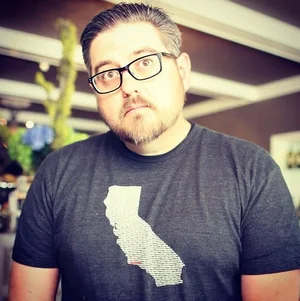
Episode 48 🎨 LOON — The Most Interesting Man in the World

Chopping It Up with Keith Saarloos · Released May 16, 2026 · Santa Ynez Valley, California
About this conversation
There are people who make art…
and then there are people who quietly dedicate their lives to observing humanity…
pointing out the absurd…
and somehow making us love each other a little more because of it.
This week on Chopping It Up, Keith sits down with international treasure, artist, humorist, adventurer, former Scots Guards officer, accidental aristocrat, and world-famous illustrator… Alasdair Hilleary — known around the world simply as “Loon.”
And honestly… this conversation feels less like an interview and more like sitting around a campfire listening to the most interesting man alive tell stories until the whiskey runs out.
Loon’s life sounds fictional:
Growing up in a 52-room estate in Scotland.
Riding ponies through hallways.
Tobogganing down staircases.
Serving in the British Army.
Guarding Buckingham Palace.
Meeting the Queen.
Traveling the world with the love of his life.
Living in a garage in the Santa Ynez Valley.
Creating artwork collected by royalty… while still somehow remaining completely grounded, warm, funny, and deeply human.
Keith and Loon talk about:
• Why humor should never become cruelty
• The disappearing analog world
• Art, adventure, and living a meaningful life
• Scottish aristocracy and American cowboy culture
• Why dogs always seem smarter than humans
• Why modern life desperately needs face-to-face connection
• The danger of AI replacing humanity
• The beauty of friendship, storytelling, patriotism, and shared experience
• And why embarrassed humans will always be funny
Loon feels like Norman Rockwell crossed with Gary Larson… filtered through mud, military humor, sporting tradition, watercolor, whiskey, and complete human chaos.
This episode is funny.
It’s heartfelt.
It’s philosophical.
And by the end of it…
you may find yourself wanting to put your phone down, sit around a fire, and actually live a little.
Ladies and Gentlemen…
Our Friend…
LOON.
From Keith’s original Valley archive
The following material is preserved from the original episode post. Existing transcript text is an archive copy and may contain transcription errors.
Episode 49 : LOON | THE MOST INTERESTING MAN IN THE WORLD
Loon: Scotland, Cartoons, Queen Elizabeth, and the Art of Living
In this episode of Chopping It Up, Keith Saarloos sits down with his friend Loon, the Scottish artist, cartoonist, illustrator, storyteller, and one of the most interesting people to ever pull up a chair in the Santa Ynez Valley. Known for his sharp humor, beautiful illustrations, and deeply human view of the world, Loon shares the story behind his name, his upbringing in Scotland, his family history, his adventures around the world, and the life experiences that shaped his art.
Keith and Loon talk about growing up in a 52-room Scottish estate, riding bicycles through hallways, family tragedy, aristocracy, boarding school, the army, humor, adventure, and the importance of never losing wonder. The conversation moves from Scotland to Australia, London, California, the Santa Ynez Valley, Rancheros Visitadores, royal commissions, Queen Elizabeth, Princess Diana, and the simple power of sitting around a campfire with real people.
More than a conversation about art, this episode is about living a rich life. Loon reflects on humor, grief, friendship, creativity, marriage, travel, patriotism, technology, AI, and the value of human connection. His story is a reminder that art is not only something you make. It is a way of seeing the world, surviving the hard parts, laughing at the absurd, and turning a lifetime of experience into something worth sharing.
-
Summery
In this episode of Chopping It Up, Keith Saarloos sits down with his friend Loon, the Scottish artist, cartoonist, illustrator, storyteller, and one of the most interesting people to ever pull up a chair in the Santa Ynez Valley. Known for his sharp humor, beautiful illustrations, and deeply human view of the world, Loon shares the story behind his name, his upbringing in Scotland, his family history, his adventures around the world, and the life experiences that shaped his art.
Keith and Loon talk about growing up in a 52-room Scottish estate, riding bicycles through hallways, family tragedy, aristocracy, boarding school, the army, humor, adventure, and the importance of never losing wonder. The conversation moves from Scotland to Australia, London, California, the Santa Ynez Valley, Rancheros Visitadores, royal commissions, Queen Elizabeth, Princess Diana, and the simple power of sitting around a campfire with real people.
More than a conversation about art, this episode is about living a rich life. Loon reflects on humor, grief, friendship, creativity, marriage, travel, patriotism, technology, AI, and the value of human connection. His story is a reminder that art is not only something you make. It is a way of seeing the world, surviving the hard parts, laughing at the absurd, and turning a lifetime of experience into something worth sharing.
-
Topics Covered
-
• Who is Loon, the Scottish artist and cartoonist
• The meaning behind the name “Loon”
• Growing up in Scotland and England
• Family history, aristocracy, and the Duke of Hamilton connection
• Childhood in a 52-room Scottish estate
• Humor, adventure, and the influence of Loon’s father
• The loss of his sister Iona and keeping loved ones alive through memory
• Boarding school, Gordonstoun, and Timbertop in Australia
• How Loon’s mother encouraged his art
• Why criticism can damage young artists
• Life in the Scots Guards and guarding Buckingham Palace
• Practical jokes, military humor, and the changing of the guard
• Becoming a professional artist and illustrator
• The difference between being a humorist and being an artist
• Traveling the world with his wife Fiona
• Living in the Santa Ynez Valley
• Rancheros Visitadores and the value of campfire friendship
• Illustrating books and working with Brooks Firestone
• Royal commissions for Queen Elizabeth, Princess Anne, and Princess Diana
• Art, AI, technology, and the future of human creativity
• Why real art, real friendships, and real experiences still matter
-
-
FAQ
Who is Loon?
Loon is the artistic name of Alistair Malcolm Douglas McLeod Hillary, a Scottish artist, cartoonist, illustrator, and storyteller known for humorous, deeply human artwork.What does the name Loon mean?
“Loon” is a Scottish colloquial word for a young boy, especially from the northeast of Scotland. It has been his nickname since childhood.What is Loon known for?
Loon is known for illustrations and cartoons that combine beautiful artwork with humor, observation, and a sharp but generous view of human nature.Where is Loon from?
Loon was born in London and raised in Scotland, with family roots tied deeply to Scottish history and culture.What is this episode of Chopping It Up about?
This episode covers Loon’s life, art, family history, childhood in Scotland, time in the army, world travels, royal commissions, and connection to the Santa Ynez Valley.Did Loon create artwork for the royal family?
Yes. In the episode, Loon discusses artwork connected to Queen Elizabeth, Princess Anne, Princess Diana, and royal ceremonial traditions in Scotland.How is Loon connected to the Santa Ynez Valley?
Loon first came to the Santa Ynez Valley through his late wife Fiona and has returned regularly for Rancheros Visitadores, friendships, art, and the community.What does Loon say about art and humor?
Loon describes humor and art as working hand in hand. His goal is to amuse people, make them laugh, and create something visually beautiful at the same time.What does this episode say about AI and creativity?
Keith and Loon discuss the rise of AI, the danger of losing human connection, and why real art made by real people will become even more valuable.Why should people listen to this episode?
This episode is for anyone interested in art, storytelling, Scotland, the Santa Ynez Valley, humor, adventure, friendship, and what it means to live a life full of experience.
Did Loon know members of the British Royal Family?Yes. During his career as an artist and illustrator, Loon created artwork connected to Queen Elizabeth II, Princess Diana, Princess Anne, and other members of the British Royal Family.
Did Loon serve in the military?
Yes. Loon served as an officer in the Scots Guards, including ceremonial duties at Buckingham Palace and royal events throughout the United Kingdom.
What is Rancheros Visitadores?
Rancheros Visitadores is a historic horseback riding tradition in Santa Barbara County and the Santa Ynez Valley that Loon participates in every year.
Where can I see Loon's artwork?
Loon's artwork appears in books, private collections, galleries, royal collections, and exhibitions around the world.
-
THE Transcript
:00 Speaker 1 Hey everybody, it's 10 AM on a Saturday morning and you are listening to Chopping It Up on 105.9 Crazy Country. And today's episode is a very spectacular episode. I have a great friend of mine in, and I'm just going to start off with this. There are people who make art and then there are people who quietly dictate their lives to observing humanity and pointing out the absurd. 0:22 And then they point, they poke at it with a paintbrush today. Today's guest is my friend, simply known as Loon. Loon is not just a national treasure, he is an international treasure. And if you had asked me as a kid what I hoped adulthood would look like without becoming cynical, without losing wonder and without losing humor, it looks a lot like him. 0:47 His art, his cartoons, his illustrations point at men with too much confidence and not enough talent, Dogs that somehow seem smarter than the humans involved. And somehow, his work never feels cruel. It feels identifiable. It's timeless and beautiful, like a matte painting from a Disney film or fine art masquerading as an illustration. 1:08 His art feels like Norman Rockwell crossed with The Far Side. Because Loon's work does not just make people laugh, it makes people feel seen. And maybe that's why people all over the world connect to his work. He will doodle a friend while he's giving a speech with chaotic precision or illustrate a book about animals. 1:27 His art may may even end up on the Queen's bedside table. He is what I wanted to be when I grew up. More than that, he's a good man. Ladies and gentlemen, my friend Loon, welcome to the show. 1:39 Speaker 2 Loon well, good morning. And this is an honor indeed. 1:43 Speaker 1 This is great. So let's just start with the the very easy one loon. Where did this come from? How? How did you have a nom de plume where you usually when you find out about your work and I know right now we're talking on the radio and you are a visual present presentation. 2:03 Charles Schulz, Bill Watterson from from the Calvin and Hobbes, Gary Larson from the far side a humorist, right? You feel like we're not Norman Rockwell really collides with humor. So where did this start? 2:19 Where did it begin? Where did the name come from? There's a lot of questions to begin with that. Sorry about that. 2:25 Speaker 2 Keith, you're using a lot of big words here, a bit of a lot of big names that I am deeply flattered that I might even be in the same context as people like like Rockwell Loon. 2:41 My nom de plume is a You may not know it may not recognise my accent as being Scottish. 2:49 Speaker 1 You're not from here. 2:51 Speaker 2 No, I live, I live in Scotland and born in London but bred in Scotland and but my accent is, as probably every listener will guess, is the what we refer to as the Queen's English or the King's English or even ox Oxbridge. 3:14 So Loon is a Scottish colloquialism for a young boy. It comes from the North East of Scotland where I live, and I've had that nickname since I was five years old. 3:29 Really. Yeah. I was brought up with another Alistair. Alistair is my. 3:35 Speaker 1 Maybe, maybe we should say that. What is your full name? 3:38 Speaker 2 My proper name is Alistair Malcolm Douglas McLeod Hillary. 3:44 Speaker 1 I could see why Loon became the bit easier, much easier. 3:50 Speaker 2 It's amazing. So I was my parents were pretty powerful people in their own right. My father's better was a great entrepreneur and and his sort of tenets of life was a laughter should be ever present and whatever you're doing should be fun. 4:14 He, as an entrepreneur, had a shot at all sorts of things, failed at most, but all but never lost his drive to, to, to have a go at things. Right. My mother was a double Olympian at skiing. 4:33 And so we were all brought up doing that like mad. And she was also an artist. She sang. She was the most wonderful person. She lived to 90. My father lived to 95 and I'm one of four, but sadly one of us was lost. 4:56 When I was 17 years old. My youngest sister was killed in a car crash which my father was driving and that was the most horrendous time to have to deal with in the family. But it's good to talk about it. 5:12 She was called Iona and a lovely person. 5:15 Speaker 1 It's it's a beautiful, beautiful way to keep people alive by saying their name and remembering them. I think about my father all the time and bring him up in conversation. It feels like he's in the next room. 5:25 Speaker 2 Yes, yes, well, I remember him too. 5:28 Speaker 1 He's a good guy. 5:29 Speaker 2 Yeah. 5:30 Speaker 1 I'm very lucky. 5:31 Speaker 2 Yeah. 5:31 Speaker 1 So you were raised in Scotland of somewhat nobility, is that correct? 5:40 Speaker 2 I suppose that there are connections. 5:44 Speaker 1 I'm sorry to. 5:44 Speaker 2 Do this to you. 5:45 Speaker 1 But I wanted to know. 5:48 Speaker 2 If I was, I don't have a title or anything like that, but my great grandfather was the Duke of Hamilton, the senior dukedom in Scotland. And indeed, rather interestingly was the man that Rudolf Hess flew to go and visit when he was in 1942, I think it was. 6:14 And it was an abortive trip which finished. He finished up being imprisoned and remained in prison until I think it was 1980 when he finally died in Spandau Prison in Berlin. 6:29 But he was trying to get through my great grand grandfather into the aristocracy because he believes that that might be a way into the British government, that he could negotiate an end to the war or a capitulation for Britain, really. 6:48 And we still have. I mean, the family has his map and flying goggles and some of the memorabilia which he crashed in a field in Scotland having run out of fuel. 7:03 So that's that's an interesting part, see. 7:07 Speaker 1 That's why I wanted to have you on today is because I, I feel like my best story that I have loaded in the gun ready to tell a joke or tell a story. Your worst story is probably better than my, my best story. I mean. 7:19 Speaker 2 God, you don't want to hear my worst story. I don't. 7:23 Speaker 1 So what was it like growing up in in Scotland? 7:27 Speaker 2 Yes, yes, we, we are. I started my life in fact in Sussex, down in England when my father worked in Lloyds of London. And one morning when I was five years old and my sister was 7 and my younger brother was about 1, he said stuff this. 7:49 I'm not going to bring my children up in England. We're going to Scotland and we're going to the Isle of Skye, which is where his side of the of our family come from and my mother said yes for Scotland but no to Sky. 8:04 Speaker 1 Really. 8:05 Speaker 2 It's quite a remote part of the world and it can be a not the most hospitable of places, although it is beautiful. 8:14 Speaker 1 Bit nautical. 8:15 Speaker 2 A bit, a little bit, yes. The Atlantic doesn't stop when it comes into crashing into the shores and the mountains. And, and so the compromise was we rented a house from great friends Gordon Cummings and it was a 52 room house. 8:38 Speaker 1 You grew up in a castle. Is this what you're saying? 8:41 Speaker 2 Well, it was. It was not a castle. It was 2 rooms. It was a kind of. It was built in 1666 and. 8:50 Speaker 1 Only 100 years before our country was formed. 8:53 Speaker 2 That's amazing. Yeah, that was, that was quite a thought, that is. 8:58 Speaker 1 I, I think about it all the time. I, I mean, we, we're going to celebrate our 250th anniversary as a country, which I've told my children, our country is five meals old, right? That's it. It's not. And then when you bring that up, oh, it's built in the 1600s. 9:14 We, we don't even have an, we don't, we don't have anything in this country. That's 1600. I mean, other than previous to us becoming a country, It's it's shocking. 9:24 Speaker 2 Well, yes, but on the other hand, what I love about coming here is that you are actually still living your history. You know, if you look at all the cowboy culture, yes, it is, is happening. Yeah. 9:40 And I love to be a part of that. We don't have that, correct. We've got heaps and stuff getting back into the ancient path and we swathe ourselves and Totten and leap around like mad Highland figures, right? 9:56 Dancing or tossing cables or whatever takes your fancy, right? Right. But no, I think it's something you should be proud of is it's, it's, it's great, exciting, exciting place to be. 10:09 Speaker 1 I I love that. I love what you said. We are currently living history. That's that's a fan it, it's not something we're going back to. It's something that is still part of our culture. Yeah. So back to 52 rooms, Sorry. 10:21 Speaker 2 About that, as you might imagine, 52 rooms was a tiny bit on the big side for for a family of four children and my parents. And so we cut it in half and let out 1/2 to in flats. 10:37 We made flats out of those and we lived in the other half. 10:40 Speaker 1 Only 2025 rooms. 10:41 Speaker 2 Only 25 rooms to one of which was a ballroom and one was a theatre and so we but there was nothing valuable in the house. All the paintings and family should have been taken away so it allowed us to ride bicycles up and down the corridors. 11:06 Speaker 1 It's like The Shining, right? When they're staying in a hotel and they're just riding bikes throughout the hotel rooms. I mean, that's amazing. 11:13 Speaker 2 So we're also bringing our ponies into the dining room, which was always rough. 11:21 Speaker 1 So, OK, you're painting a very specific picture. You're you're up in Scotland, you're riding ponies through the the ballroom. 11:28 Speaker 2 Yeah. Well, yeah, yeah, we did. Actually. We didn't didn't take the ponies upstairs. The ballroom was upstairs. 11:35 Speaker 1 Of course. 11:35 Speaker 2 Not we had there were a few rules. 11:39 Speaker 1 This sounds wild. This is amazing. 11:41 Speaker 2 And the stairs were were big enough that we had a carpet going up and down that had stair rods holding the carpet in place. So if you pull down the stair rods, you could pull the carpet straight to form a toboggan run. 11:57 These sort of activities were all encouraged by by my parents and we had with very little money and my father had started a caravan site and that flourished, but it wasn't a big, big earner. 12:16 His other enterprise was buying salmon from all the coastal netting and the all the rivers. And Scottish salmon in those days was a highly prized product, particularly when it was smoked. 12:35 I mean, would sell for the same price as caviar does today. And in in the days, early days there, there was a restriction on how much money you were allowed to take out of the country. 12:51 If you went away on holiday of £50. You weren't allowed more than that per person. Really. Yeah. I'm talking sort of early 60s, yes. Yeah. So because of our great skiing background, Right, we went skiing for two weeks every year. 13:14 And my mother and father would organize the trip because for every 15 places that you booked, you get one free on the train, on the plane, on the hotel. And they're bonhomas for buying ski passes. 13:31 Ski that everything. Which meant that if we got enough people together, we could take over a whole hotel and that would pay for the family skiing holiday. Not only that, but we would have to smuggle smoked salmon in our suitcases. 13:49 So we tended to arrive at the beginning of our our skiing holidays smelling rather fishy. And the smoked salmon was then sold to local hotels and filled our little piggy banks and pockets with a bit more money to spend. 14:07 Speaker 1 It sounds like your youth was filled with a lot of joy to a certain extent. I mean, you're staying in a let's just say, you know, 50 room home and and and making do and figuring it out and not scheming. 14:24 I don't know if that's a negative term, but a little bit of entrepreneurial spirit, I guess, or can do attitude. But you know, the fact that your father go back to the very beginning when you just were discussing him, how a little bit of humor, I think as you said it, in everything that you do, it seems like he was, you know, there to have a good time and, you know, pulling out the rods and and riding bicycles and indoors and things like that. 14:51 It sounds like a exciting trove of memories of a youth. 14:56 Speaker 2 Oh hugely so, yeah. And we gave a ball every year in the ballroom. But the deal was that all the children had to put performances on. So we did little skits and plays which were all great fun, incredibly amateur and generally it produced a lot of laughter. 15:20 My father who was, who was pretty rotund, which is a bit of a family failing I think. But he was tough. He was a strong man and as I said, I think he, well, he spent 16 years with the Special Forces after the war. 15:41 He very much loved the ethos of the Special Air Service, which basically was paying somebody to be a naughty boy behind enemy lines and cause chaos. 15:55 Speaker 1 So you're saying your father was also a spy? 15:58 Speaker 2 Well, he wasn't a spy as such, but he, he, he was instrumental in keeping the SAS alive. He was, it was territorial that he did, which meant that it's it's not full time, it is part time. 16:14 Got it. Nonetheless, the the regular, the full time SAS had struggled to find a role after the war and he basically kept it going and started as AD squadron standing for Dundee in the South of Scotland, which in those days was part of the territorial lot. 16:36 It's now become the main squadron in the regular SAS. Really. Yeah. 16:42 Speaker 1 Does that have any correlation? Forgive my ignorance to Scotland Yard. 16:47 Speaker 2 No, that's that's Scotland Yard is is part of the London Metropolitan Police. 16:53 Speaker 1 So that would more or less similarly be FBI versus like say FBI is internal, CIA is external, SAS would be external, Scotland Yard would be internal. 17:05 Speaker 2 Yes, I suppose you could say that the SAS would equate to your seals. Got it. So but not nautical. 17:16 Speaker 1 Yeah, sure. 17:18 Speaker 2 It was started by David Sterling who was a great heroic figure during the war and operated behind enemy lines playing up ammunition dumps and oil dumps and was was a great figure who was well known to us as a family. 17:36 Speaker 1 Really. 17:38 Speaker 2 And so. 17:39 Speaker 1 There's one other person and I may, maybe I'm making a big jump here, but there was a, an actor who was SAS that was in Lord of the Rings. Sir, I'm going to blow it here and might have to cut this out. But he, he knew Tolkien. 17:57 He was part of the SAS. And the only reason I know this is a friend of mine is a huge Lord of the Rings fan. And, and they were doing a scene where he was knifing someone or he was being stabbed. And when he was stabbed, he goes. But I want you to go and scream loudly and he goes, that's not a way that a man sounds when he's being stabbed in the back. 18:18 And he says, how do you know that? And he goes previous history. And I went, holy cow, this is fantastic. OK, so father is SAS entrepreneur, huge exciting upbringing. 18:34 Let's get into your life. So from there, where did you go? 18:40 Speaker 2 I I went to Gordonston, well firstly I was educated at a prep schools and I was sent away at the age of of eight down to Yorkshire. 18:55 Speaker 1 Eight years old. 18:56 Speaker 2 Yes, it was a little premature because I was expelled from my kindergarten. 19:03 Speaker 1 This is the interview of the most interesting man in the world. OK, continue, continue. This is great. 19:09 Speaker 2 Well, I don't think I can quite tell you what it was about. 19:12 Speaker 1 Quite all right. Statue of limitations. 19:15 Speaker 2 One of those things that young boys get up to. 19:18 Speaker 1 Fair enough. 19:19 Speaker 2 So off I went aged 8, down to Yorkshire and my father wanted me to go as he had done to Eaton, and it soon became evident at Ace Garth that I probably wasn't eating material and it was recommended that I went on the outward bound angle and way of education. 19:44 And so Gordon Stan provided that very much. There was a lot of sailing, you know, getting up early and going for runs and exercise. Healthy body, healthy mind and everything. And I thrived there. 20:00 It was great. 20:00 Speaker 1 It sounds like you would have, yes. Skiing and tobogganing down the stairs and riding bikes, Yeah, it makes sense. 20:07 Speaker 2 And so an opportunity arose when I was 14 to to go to Timber Top in Australia as an exchange student over 2 terms. So aged 14, I, I was, I went around the world by myself for nine months really. 20:29 And it's, it's amazing to think of modern technology and and communication now you know, the prospect of being out of contact with your family. 20:40 Speaker 1 Totally out of contact? Totally, yeah. How long would it take for a letter to get from Australia back to Scotland? A. 20:46 Speaker 2 Week or two, I think I had three phone calls during those nine months. Wow. And but my mother was always very inventive. She used to send me a tape recording of noises from home. 21:04 So these things I had to play in front of my fellow students in Australia thought it was quite funny because they were things like the the budgerigar perp tweeting, the bull terrier barking and, and she would then talk and tell stories on this tape or even my father snoring in front of the television. 21:29 And these noises from home were, were lovely. They made you feel good. 21:34 Speaker 1 Fantastic. So to get to get one of those tapes, it was kind of like, you know, listening. Yeah, you're like you're described. It would be popping it in. I'm sure you'd close, you know, hit play and lean back and close your eyes and all of a sudden you were home. And it's like almost someone reading you a bedtime story from home and little bits and pieces of things that you grew up listening to and here you were, like a warm blanket. 22:00 Speaker 2 It was beautiful. Australia was was a fantastic place to go in those days, full of opportunity and you know if anybody rolled their sleeves up and want to have a go at something, there were opportunities galore there. So it felt I had to behave really well in order to get chosen to go. 22:20 But once I got there, I let go. 22:25 Speaker 1 The real loon came out. That would be. 22:28 Speaker 2 That would be true to say because we always used to refer to the convicts as being deported to Australia, but I was the one who nearly got deported back again. 22:44 But all fantastic fun and adventure. That is the other thing my father advocated, you know. So he was thrilled that I'd been chosen to do this and what an experience. And I was by far and away the best thing I did up until the age of 18 and got back eventually. 23:09 And at the next sort of wave of exams, I failed pretty well every single one. And however, art had been a golden thread through all of this. 23:29 It was, I suppose, the age of five, my my mother started to really encourage me and she never criticized. And I believe that there are plenty of people with plenty of talent who perhaps have been diverted because they've somehow been made to think that they're not good at it or they can't do it or they can't do it as well as they want to or the as well as the next door person. 23:58 But with kind and gentle nurturing from every single person involved in the teaching of art or nurturing of art throughout education. It's really important not to not to treat this very delicate thing a bit aggressively and, and knock it back. 24:19 I was lucky right through my mother was brilliant. I had very good art teacher at Gordon Stone and he looked after me probably because he was an incredible snob and he loved anybody who had any friends who might have a title. 24:38 So we had a few friends locally who people like the The Thane of Corda, which is quite a good title from Macbeth. 24:50 Speaker 1 He was the theme of Corda. 24:52 Speaker 2 Thane of He's otherwise known as Earl Corda, and Corda Castle is right next to where we live, and we were all good friends with them. I mean, that place is steeped in history. And yeah, there was, you know, there's AI suppose I've always had a lot of friends with a lot of very interesting places, houses full of beautiful things and. 25:20 Yeah. 25:22 Speaker 1 Just to put a pin in that, just a second, because this is definitely going to be two episodes, so this is going to be the first half. I'm just letting everybody know, but I think a great place to finish this episode, to begin the next part of art would be I. I find it very interesting just listening to this conversation where you're talking about being around people with titles or being around AI. 25:44 Guess is would the word be aristocracy? 25:46 Speaker 2 Yeah. 25:47 Speaker 1 Right, aristocracy, but you are experiencing a totally different life by travel, art, humor, excitement, entrepreneurship with your family, your father festering or, or or, you know, keeping the, the fire lit, if you will, of humor and enjoyment and really, really, you know, sucking the marrow out of the bone as like you should go out and experience everything where you set a fostering of adventure. 26:16 And even if you're an aristocracy, you might have things to live up to or a name to live up to or a title to live up to, which is its own sense sensibly a prison that you have to act accordingly. Go to the right school and be the right kid. 26:32 Maybe you know, work, work and study where you're learning about things so that when you do receive your title, if you will, you're living up to it in a way that hundreds of years of tradition have forced upon you, rather than you becoming the person you maybe should have been meant to be. 26:54 Is that a good way to describe that? 26:55 Speaker 2 Yeah, yeah, there are definitely. I've got plenty of friends who've been born into a position that they can't get out of. You know, particularly one is Hugh McLeod of McLeod. He's the chief of the clan, McLeod the 38th. 27:14 And you kind of don't really want to be the one who throws it all into touch, but he can't. There are trusts and there are all sorts of historical things that that he he is is bound by and he can't get away from it. 27:29 Speaker 1 Yeah, what an incredible weight to be thrust upon you. You know, the only my only view into that world are like things like watching The Crown or, you know, anything. You know, some of those stories where it's like, oh, I want to be this, but you were Born This Way. 27:46 I mean, we live in solving The Little Mermaid is an example of that kind of story where no, I want to be this and I want to be an artist and I want to no, no, no, you need to act accordingly. You need to be this. You need to do that because you have something to live up to and you don't want to be the one domino like you're saying in a chain to be the OR the wink link, if you will be the one that like, oh, this has been going on for hundreds of years and I was the one who caused it to fail. 28:12 Yeah. Yeah. What an incredible burden. 28:14 Speaker 2 Yeah, yeah. I mean, I could tell you lots of stories, people with titles and you know who've. 28:21 Speaker 1 But what? What an exciting life, being able to dip your toe into that while still remaining free. 28:28 Speaker 2 Absolutely. And I suppose I don't appreciate it sometimes because it's, I think, you know, talking about richness. I haven't got much money, but I'm probably as rich as anybody with experience. 28:44 Speaker 1 Absolutely. 28:45 Speaker 2 And, and the, the lifestyle that I've been lucky enough to have has given me, you know, a Bank of memories and experiences that I love to share with people. And, and it's it now that I've got a 72 years old, you know, I can pontificate and chew the cud with the people and sit around the campfire and lap it up. 29:11 Speaker 1 Well, a good, I think a good place to end this episode would be that thought process of, you know, I, I know people that have a few commas in their bank account, right? And as they've gotten older in life, they realized that they'd won that game, but maybe have lost the other one. And now spending any more enormous amount of time and energy and expense to go out and have all of these experiences. 29:34 And I'm lucky enough to be able to go out to lunch with a few people. And I say, what if you were me at my age? What would you do? I ask that question constantly. And they go, go out and have more experiences. Go out and do the things. Go, go try things and maybe fail versus put more commas, put more zeros behind, behind your name. 29:56 And the best way I've ever heard it said was do you love where you live? And I said yes. And they said, do you love your wife? I said, absolutely. Does she love you? Yes. You have a good relationship with your children. Yes, and I was just kind of answering the question. Yes, yes, Yep, Yep. He goes, well, what more do you want? 30:13 And I said, well, a few more zeros would be nice. He goes, you wouldn't trade, Would you trade any of that for more zeros? And I said absolutely not. And he goes, well then you're doing the right thing. I wouldn't change a thing. So right now you're listening to Chopping It up. We're going to chop this up into two episodes and we are sitting here with the most interesting man in the world, Loon, a good friend. 30:32 This is the end of episode 1 and we will be back next week with episode 2. Everybody, it's 10 AM on a Saturday morning and you were listening to Chopping it Up on 105.9 Crazy Country with Keith Sarlos. And this is episode 2 of our very special guest, The Most Interesting Man in the World Loon, a artist, a man who grew up dipping his toe in the aristocracy, but also keeping enjoyment and venture fun and art very much alive. 31:01 So if you missed the episode 1, it is on. If you search on any podcast for chopping it up, Keith Saarlos SAARLOOS, it will be right there waiting for you. But this is episode 2. So where we just left off. Whereas your family was talking about art and excitement, we had a little bit of conversation about aristocracy and but also being the person you're supposed to be versus having the weight of of expectation pushed upon you. 31:31 Was that a good place? 31:32 Speaker 2 Yes. 31:33 Speaker 1 There we go. 31:34 Speaker 2 Let's begin. Well, I if I dare. My father wrote his autobiography before he died, which was important to him. And he was, it took us 10 years to edit it because it was so full of stuff that you couldn't really say right. 31:57 And he was searching for a title for it and used the cry that his grandmother used to shout at him, which was whatever you're doing, don't. 32:08 Speaker 1 Fantastic. 32:09 Speaker 2 And it's been a good way of looking at life or looking at career moves for all of us lot. It makes you think outside the box thinking do I have to do this or whatever? 32:26 So, you know, do. 32:28 Speaker 1 You do you feel in that same thing, Do you feel that culturally Britain or versus the United States, right. Britain seems to have from from friends of mine who are British that the tallest sunflower syndrome where you don't want to grow too tall because everybody will take a whack at you. 32:47 And if you but in America or in the United States where it's like, no, you want to grow as tall as you can and be, you know, be a cowboy, right? Be out there entrepreneurs. Those are the people we Revere versus sometimes in Britain, it's like, no, this is your lot in life. This is what you're going to do. 33:03 This is what your father did. This is what you're going to do. Do you think that's characteristically true, America versus Britain? 33:11 Speaker 2 It makes because. 33:12 Speaker 1 You seem like you break the rule. 33:14 Speaker 2 That's that's the idea. We like breaking rules, you know, rules are made to be broken. But in saying that, you know, you do need to have a structure and A and a good solid template for working under. 33:30 And I was going to say something and I've forgotten what it was. Oh yes. Longfellow the poet wrote a rather wonderful poem called, well, Hiawatha, which I'm sure everybody knows. 33:48 But he, he wrote another rather good one about called Excelsior, which I can't recite, you know, word for word. But it's about the hubris of youth and how you strive for the very top and believe in every step you take as the youth climbs the mountain with Barry carrying the banner of Excelsior. 34:12 And he's offered places to rest on the way out, but he refuses it. He has to keep going. And he goes up and up and, you know, lovely ladies offer him a nice breast to lie on, get a bit of comfort. 34:28 And yet he refuses and keeps going. And eventually he arrives up in the glacier and he keeps going until he dies and they they find him with his banner still aiming for the top Excelsior. 34:45 And it's, that's always been a sort of aspiration, I suppose, when it comes to to art and painting and looking to achieve stuff. Before I began doing this professionally, which is when I left the army, I spent four years in the Scots Guards. 35:08 I went to see a guy who had a Gallery in London and said, how would you advocate I structure my career? And one of the things he said was what whatever you're doing, don't allow yourself to become satisfied by what you've produced because that will be the end. 35:26 So there are always avenues that if you call yourself an artist, you should never be afraid of going to look down. And I've tried to practice that. I found that some avenues have worked well for me. Humour is the the bit that clicks and I've tried doing serious things but it doesn't seem to work very well. 35:51 Speaker 1 I guess that's a great question. So in your art, and as you're listening to this, we're speaking with Loon, who is an international treasure, I think is a good way to put it. But your art has a certain feel to it when I, when I view it, right? 36:06 And you creating something you could, I always think that's one of the scariest places you can be because if you're creating any great art, number one, it can fail at any time. That's how I define art. If if you're doing something that can fail at any moment, you're right in the pocket of creating art. 36:22 One line too much or you're playing guitar and you miss a chord, you, you failed in the art, right? But you can start again. You can begin again. But the whole, the whole process is creating something beautiful from start to finish where you're happy with it by the end, right? 36:39 Do you consider your art to Are you a humorist first or an artist first? 36:47 Speaker 2 That's an interesting question. I, I think it, it, it has got to run hand in hand because humour, humour has always been my bedfellow and and so also has the desire to be able to create something, create something that is visually attractive. 37:10 Speaker 1 Incredibly difficult. 37:11 Speaker 2 So I, I tried to combine that and I suppose I do it by if I go and travel anywhere, I will paint scenery, landscapes that I can then use in cartoons later. So I've got a a huge backlog of sketchbooks full of ideas and sketchbooks full of some of the places I've been and done. 37:37 The The thing that brought me to the valley was my lovely late wife Fiona, somebody who I'd known since I was. 37:55 Speaker 1 Take your time. 38:01 Speaker 2 12 years old, she came here in her gap here as a friend of a friend of the Firestone family and she fell in love with the place and they all fell in love with her and she fell in love with them and it was a huge success. 38:25 So we got married a few years later in 1981. And I said to her, how about we take a year and go and travel around the world and I can doodle my doodles and she can help and do stuff amazing. 38:46 To which she replied, why not two years? 38:52 Speaker 1 Adventure. You married the right person. That's a partner. That's fantastic. 38:58 Speaker 2 That's a keeper. 39:00 Speaker 1 That is a keeper. 39:01 Speaker 2 So on our journey we we went to Spain, Sri Lanka, Thailand, Hong Kong, Nepal, Philippines, Australia, back to Hong Kong and then finally to California. 39:18 And we spent nine months in the valley here living on baseline 3142 baseline in a garage and where you would have parked your car, we have a double bed. 39:37 Speaker 1 You are an adventurer. Fantastic. 39:41 Speaker 2 Well, it was a very we had a very simple little bathroom and a very simple kitchen, but they were the happiest days of our lives. I rode with Rancheros visitor Doris for the first time and absolutely loved that. 40:02 And when that was done, we went. And actually went home, bought a house in London, we had had three beautiful children, 2 girls and a boy and they've been out here that we all came back in the Millennium. 40:22 And I did a book launch for a book that I produced in 25th. No, but it must be just before the Millennium. And we did a book launch here in Solvang in the bookshop. 40:37 Speaker 1 Yeah, book loft. Yeah, world famous. 40:39 Speaker 2 Yeah. Well, that was that was fantastic. And Brooks Firestone helped with that. Yeah. Subsequent to that, I've also illustrated several of his books. He's a He's a prolific writer, yes. 40:55 Speaker 1 Very much so. 40:57 Speaker 2 So. 40:59 Speaker 1 I got to be in one. I think that's actually how we met. 41:02 Speaker 2 Indeed, indeed, indeed. The Valley animals stories. 41:08 Speaker 1 Fantastic. 41:09 Speaker 2 And you, Keith, were chased by a bison. 41:13 Speaker 1 I was, That's absolutely true. And then one day, well, where I entered your story a little bit is I, I got to sit next to you when Brooks was giving a speech. And I, I am a prolific doodler. 41:30 To enter my story into this, when I was a child, I wanted to be a cartoonist. I love drawing. I would draw in all the margins because I can't spell very well and I don't take very good notes. But if I listen and I draw, usually I'll retain it. And I was sitting in there and I saw this nice gentleman sitting next to me with a beautiful accent when his friends started talking immediately open a book and a magnificent bee. 41:57 What I was doing while I was trying to proper right. And here you were and giving the green light, if you will, to a younger guy saying, oh, just whip open your book and start start doodling. And it's perfectly OK. 42:13 And just for me, to you throwing flowers in your direction as you, as you catch a breath. I think Brooks Firestone's always been a example to me. And I think a lot of people in this valley, you are definitely along those same lines. 42:30 And I can see why you 2 are such good friends because in America, I may maybe that's not the right way to say it, but you know, to be tough, to be ready at all times, hardened. 42:47 Maybe that's something I grew up with, you know, that's you got to work hard, you got to be hard, you got to be ready to make tough decisions at all times. And when I saw Brooks and met him and met you and, and quite a few other people, honestly, in the Valley, romanticism is not a negative trait. 43:09 Being in love with your wife, as you've experienced, as you've stated, is a virtue. Being hopeless, really being a hopeless romantic and writing, which I try to do a a fair bit of why do I have a radio show? 43:27 Same thing. Those are those are great virtues to have because the world needs more people that tell people that their art is beautiful and that they're out there trying to do things. And I've always really admired that about Brooks and yourself. 43:44 And I can see why you guys are fast friends because you know who writes a book about animals in the valley? Brooks Firestone. And if he can do that, man, maybe I should do something like that. You know it. It is truly a beautiful. You're planting trees that you're you might not know that you're sitting under the shade of, but having met you and Brooks and things like that, I think you've made a lot of young men or younger men try to do things that they really wish they would and take a swing at. 44:15 So I wanted to say thank you for that. 44:17 Speaker 2 Well, Keith, I was told when I was trying to decide what to do after I left school by an old Colonel who had rather a pretty daughter. I was crazy. 44:34 He he was running an art gallery in his in his retirement. And I said to him after dinner, what would you do with your life if you were me? And he said you, I have always got a talent and you can pick that up at any time and use it. 44:51 So if I were you, I'd join the Army. And so that's exactly what I did. And I had been lined up to go to up Bath College of Art, grow my hair down to my backside, put beans around my leg and smoke dope, create ridiculous things, probably finish up designing Lube papers. 45:13 Right, Right. And instead I was marching around the square at Par Bright, being shouted at by Sergeant majors and wonderful people. And there, of course, in the Army you have a whole plethora of wonderful humour. 45:30 Yes. 45:31 Speaker 1 Yes. 45:33 Speaker 2 Most of which I couldn't repeat on air, right? In fact, there were There was opportunities often to play practical jokes. I was part of the Scots Guards. We did the We guarded Buckingham Palace and Saint James Palace with soldiers who wore the big tall bear skin hats. 45:55 And we did. The changing of the Guard did. 45:58 Speaker 1 You do that. 45:59 Speaker 2 Yes, I spent 2 1/2 years doing that as an officer. So I had to make sure the soldiers were all manning the sentry boxes and doing what they're supposed to do. But there was 1 occasion when we thought we'd play a of a practical joke on the captain of the Guard. 46:17 Speaker 1 Which I'm sure they all loved. 46:18 Speaker 2 And it's got me into trouble yet again. But the the ceremonial key for the outgoing guard commander is handed over to the incoming guard commander at precisely midday on Buckingham Palace forecourt in front of thousands of tourists every day. 46:40 So we I managed to strap an alarm clock inside the bear skin of the outgoing guard commander, my guard commander and set it to go off at 12:00 just as the key was being handed over. 46:56 The bands were all silent. The tourists were all watching in silence and off goes his basket, ringing like yes, inside, of course, there's nothing he could do. Nothing he could do, no fantastic. 47:12 And so he went on with his head ringing with his noise until he was able to March off the parade ground and sort it out. So that got me a few extra tickets so. 47:27 Speaker 1 Let's jump into the the art you, you, how would you describe your art? I mean, would you say illustrator? Would you say cartoonist? Because when you were just discussing creating beautiful backgrounds, and then that's an incredibly difficult thing to do, to tell a joke, first create something beautiful and then to tell a joke. 47:46 Speaker 2 My my aspiration is to humor people and make something amusing. If I can get a laugh, that is the real icing on the cake. But it it's just amusement. It's good enough. 48:02 And you know, you can't aim too high. Well, you can aim high, but you can, you can aim to do what you know you can do, which is actually what art is all about. I think, you know, you a lot of people try and paint something that is way beyond their ability. 48:22 So keep it simple and do what you know you can do, then it'll look really quite good. So yeah, I've, I mean, it's in our world tour that we spent 2 1/2 years on our working honeymoon. 48:41 I exhibited in all kinds of places around the world, many of which I've kept going and connections with, with really interesting places. 48:52 Speaker 1 What would you consider some of your career highlights with your art? 48:58 Speaker 2 Christina Onassis stole one of my paintings off the wall in the Palace Hotel in Saint Maurice in Switzerland as she came out of the nightclub at twelve 1:00 in the morning inebriated. 11 And it was a cartoon of somebody with a terrible hangover, and as the richest woman in the world as she was then, it was quite amusing that that should happen. 49:29 Anyway, I had to get the police to help me to get it back again, put it back up on the wall. Four days later she came back and did exactly the same thing. Took it again. 49:41 Speaker 1 Fantastic, I love it. 49:43 Speaker 2 And so I'd already sold it to somebody else, and I had to say to them, look, I'll get it back if I can. But if I can't, would you accept another one similar? And she said yes, of course. So I eventually had to give in and couldn't get it back the second time. 50:02 So I painted a similar cartoon, but on the background. I put a little painting on the wall of a woman in a fur coat tiptoeing away with a painting under her arm. Titled it The Light Fingered Greek. 50:17 Speaker 1 That is fantastic. 50:19 Speaker 2 But she was, yes, I think she was able to do that, you know, just go around and help herself to what she wanted and somebody would come by and mop up the pieces afterwards. That was quite an amusing time. I've had, I've had a lot of really interesting commissions. 50:37 Probably the best ever was was when the the Royal Company of Archers in Scotland who are the monarchs bodyguard when the monarch comes to Scotland to Holy Rood Palace. 50:52 Speaker 1 Where they spend an incredible amount of time. 50:55 Speaker 2 Yes, they do. Yes, I mean Balmoral Castle and is one of their favorite places to be and it's my cousin is the hereditary keeper of Holy Rood Palace as the Duke of Hamilton, the premier Duke of Scotland. 51:11 Speaker 1 As one is. 51:12 Speaker 2 As one is and his other role is that he he has to to protect and look after the crown of Scotland for when the monarch comes. So whenever it's brought out on parade or or produced for for a coronation or whatever, that is his role to carry it, which is, yeah, it's quite interesting. 51:33 It is. 51:34 Speaker 1 All of that pomp and circumstance, I'm, you know, that's probably the exact wrong thing to say, but one of the things I've always been, you know, quite honestly, from being an American looking at Britain, who I've always wondered, like, who makes that hat? 51:50 Right? When you see someone wearing a, a, a piece of metal, right, that has been hand shaped and there's 50 people standing in a row and they're all wearing the same uniform and they're all wearing the same metal helmet or the bear skin. 52:07 And, and I think of that as like there's someone out there today that's making that, that has been making that for hundreds of years. And it's probably one family and it's 1 little place. But yet that tradition has remained steadfast where you're saying your cousin, you know, holding a crown that seems as as far as you can get from the, you know, American circus that we all kind of exist in where tradition only comes at military. 52:37 Like a military funeral has has tons of tradition, right. If you served in the military, a gun salute and the flag being folded and handing to handed to someone, a president passing away. We have very little cemented tradition in where in Britain it feels like it's every few weeks there's something that you, you, you watch somebody wearing something that you can't believe somebody is still making to this day, right? 53:06 Speaker 2 You're absolutely right. And and there is, is a huge sort of background of people involved with, with the, it's an industry, yeah, with the traditions that we have. 53:16 Speaker 1 I didn't mean to derail you from your cousin moving the the Crown, but it's just, yeah, it's there's probably a book on what he's supposed to do at all. 53:25 Speaker 2 Times Oh, I think there's all sorts of stuff yes, written out, but the hereditary stuff like that, he's very interesting. OK, so there's lots of it. Back to the So back to the Commission that I was given by the Royal Company of Archers. They wanted to give Her Majesty the late Queen Elizabeth a Diamond Jubilee present and I was commissioned to paint 4 cartoons, a set of four, which I did, and we presented those to her at Holy Rood Palace in a private room with I think there were about six of us there. 54:05 And the cartoons were about The Archers themselves. These are people who carry a Longbow and have arrows. Should there be a jihadist in the crowd who decides to have a a go at Harmonic, they would be set about with a bow and arrow. 54:25 So. 54:27 Speaker 1 And they practice. 54:28 Speaker 2 Yes, but I mean, there are of course there are other people. 54:31 Speaker 1 There are other people around, I understand. 54:33 Speaker 2 So the the the four cartoons were about the Royal Company of Archers and their uniform. One of them was. Perhaps I should explain. Each one has a bonnet. And in the bonnet are two eagle feathers and they bend to the right. 54:53 So they have to come out of the wing, the left wing of a golden eagle. And so I did a cartoon of one of these guys climbing up a Cliff face. Both his his feathers are bent and he's got the eagle's irony. 55:11 And the eagle is quietly minding its own business sitting there, and he's plucking a couple of feathers out of his the back of his wing. And when we presented that to the queen, she quick as a flash said, oh, gosh, we're going to have bald eagles here before you know it. 55:33 Speaker 1 This is fantastic. 55:34 Speaker 2 She had. She had such a lovely sense of humour, nicely wicked at times. Not that I knew her that well, but I met her on one other occasion in Windsor Castle when Britain had a promotion of the arts called Cool Britannia. 55:54 Speaker 1 Cool. 55:55 Speaker 2 Britannia. 55:56 Speaker 1 Perfect. 55:58 Speaker 2 But I and I've done other members of the royal family as well. So there's been quite a quite a lot of work I've done also for the Household Cavalry who provide all the mounted escorts for royal occasions such as marriages. 56:20 So I did one when Charles and Diana got married. I had been at the same school as Charles and actually my lovely late wife Fiona had been at the same school as Diana and knew her and I had indeed sold paintings to Diana. 56:40 She came into an exhibition I had specifically wanting something. And yes, that was that was rather lovely. You don't sort of think of it as being a significant moment when it happens, but it's looking back on it. 56:55 It's it's wonderful. I also painted a picture for Princess Anne for which she gave to the Queen for her golden wedding anniversary. And when I went to Windsor Castle, I said to her, Your Majesty, you might remember that I did a painting for you. 57:17 And she said, oh, it's you. It is. 57:30 Speaker 1 That's fantastic. 57:32 Speaker 2 And she said yes, I I have it by my bedside, which I was incredibly flattered with. 57:41 Speaker 1 Loon you in your life is I hope you write your autobiography. I really do I mean you have had a opportunity to live a fantastic life. 57:57 I mean part of our just just me and you having a conversation in the last week and I, I, like I said, I, I feel a beautiful kinship. I consider you a friend. I hope you know one day, I hope you would consider me one. 58:10 Speaker 2 Of course I do. Of course I. 58:12 Speaker 1 Do I know? But I, I feel lucky to be in the same room with you. And the beauty of that is there is something truly magnificent about living a well earned life and to be able to grow up in a place where you're tobogganing, you know, down a 52 room man, I don't know what to call it. 58:35 Estate. Yes, right. And riding bikes and, and, and having a, a mother and father that are fostering humor and a mother who is fostering art and is creative and sending you tapes while you're away of just sounds of your father snoring and, and the sounds outside, right, while you're 14 years old and halfway around the world meeting your beautiful wife, taking a, a trip where you say, let's go for a few, you go for a year and oh, let's, let's make it 2. 59:07 And then living in a garage in the San Ynez Valley and, and, but never losing. And this is the part that I, I am, I admire. I still try straight right Hemingway. The world breaks everyone, but it some people, it just takes its time. 59:25 And with you, you, won't you, you were not broken. You were creating art. You stayed in this conversation. You've laughed 50 times. You, you, you had tears in your eyes thinking of thinking backwards, right? 59:41 But every time I see you, it is I can see someone who loves life that is on life's adventure. And I think in this day and age, what the world needs more of is people thinking about life as an adventure. 59:57 If, if everything is a experience, right? If everything is an experience. And I think your art says it really well because one of the things I've seen in your art is, you know, if it's someone getting kicked by a horse or something bad happening to someone, there's always that moment of, of almost levity. 1:00:16 When the bad thing is happening versus getting stuck in the mud, right, you're like, well, here I am, here I am again, right, kind of a thing and having humor with it versus getting stuck in the the bad place that you're in right now. And if anybody could take a page from you, it it is to have humor in the worst of times, have humor in the best of times. 1:00:37 Be looking forward to something else and all the while creating art as you go. 1:00:42 Speaker 2 Well, you pay me a lot of compliments. 1:00:45 Speaker 1 But I see it in you. I see. 1:00:46 Speaker 2 It yeah, but I've got to fire a few back at you guys too because I come here every year religiously to go and participate in rancheros and it gives me an opportunity to discard my mobile phone, sit around the campfire and share time with people. 1:01:10 Not only that, you get on the back of a horse and what a huge privilege that is to ride around your countryside and the the remote wilderness areas with friends and with strangers who you've never met before. And you make friends chatting away, sitting in our horse and and walking into the sunset. 1:01:31 It is truly beautiful and they that experience to me is very, very valuable. And I love coming here too because, you know, there's a lot wrong with this world at the moment. And in the last week, I have probably sung God Bless America about 40 times. 1:01:52 I now know the world's inside out except for the setting second line when it says from the light with the light up above. And I always mix that bit up anyway. I, I love the patriotism. It's not nationalism. 1:02:08 It's the patriotism that is evident here. The, the, the respect that is paid to people who have served the respect and, and, and importance of your flag and believing in, in your country which leads the Western world. 1:02:26 I mean, goodness me, isn't it evident in what's happening in the Straits of Hormuz and Iran and America has taken a bold step and I think Britain should support you guys to the hilt. 1:02:42 It's it's wonderful. One other thing I I did just to sort of underline the negative side of life which which the mobile telephone created. I took my computer into my garden a few years ago and shot it with my rifle. 1:03:04 Speaker 1 I expect nothing less than that from you. 1:03:10 Speaker 2 Well, it was, it was, it was a heartfelt and I can't help you know, the fact that AI is now creeping into the portfolio of cartoons. 1:03:25 I mean, even publications that I've been used to seeing have changed out of recognition with, with AI, I'm treating it as a bit of an enemy at the moment, although I do sometimes use it. 1:03:41 But I'm, I'm fearful that people would lose what is essentially the, the, the goodness in each other in the chemistry of a face to face meeting with somebody and the, and the love that you find for each other. 1:03:57 Speaker 1 I have friendship. I see that pendulum swinging. I just me personally, because one of the things I am very proud of America for doing right now is when these data centers come in, there are entire towns that are showing up and saying no. There are, I think the pendulum with the youth that I see with my children, right? 1:04:16 They value community, they value face to face. They value live music. They value going to the pub. Well, my daughter does. My son's a little young for that, but they really love what physical, almost physical connection. And I, I am very, very hopeful for the future because I can see them looking at those things as tools, but also seeing value in humanity, seeing value in true painting because everybody now can look at an AI go, I see it's AI great, but that's disposable. 1:04:49 But something like, and I'll just say it to you. I handed you a pen in my cowboy hat the other night and you just walked off and sat by a fire for a little while and doodled all over it. And what you've what if you have given my family is an heirloom. And that's that's, and I mean that truthfully, because I think that there is going to be a vast difference between these things that are disposable. 1:05:13 And then the value on things that are not disposable is going to skyrocket exponentially because a real person put a real pen to a real paper and sat there and thought about it and did something. 1:05:29 And I see the youth valuing that to no end. So I think you have a good 25 years left. And I think, you know, like I said to you, you, you were Banksy before Banksy, I mean. 1:05:42 Speaker 2 Very it it was a a lovely opportunity and I felt I was taking a bit of a risk when I did a tiger being milk. 1:05:52 Speaker 1 Well, we don't have to go into it. 1:05:55 Speaker 2 Which? 1:05:55 Speaker 1 What happens there stays there. Come on, man, we've gotten past our time, but I could talk to you for five hours and I, I, I look forward to seeing you in about a year. 1:06:09 Speaker 2 Well, I'll be back unless, well, even as a ghost, I'll come back. 1:06:14 Speaker 1 Feel free to haunt me. 1:06:16 Speaker 2 I will perfect. 1:06:18 Speaker 1 Everybody, you have listened to two episodes of one of the most interesting people on the planet. There are a few people in this world that are truly rare. Oh, go ahead. 1:06:30 Speaker 2 So I would just like to say thank you so much, Keith, and hold on to what you've got here because I've heard a lot of people saying what's going on in Britain and we are having a pretty difficult time. And I like the values that have a good moral compass that I'm finding here. 1:06:52 And Britain is hopefully going to follow you guys for a bit. 1:06:57 Speaker 1 Well, you are cordially invited if you ever need to find a place other than Britain to live. I think the San Ynez Valley would be very, very lucky to have you. 1:07:06 Speaker 2 Well, that's a lovely idea. You never know. 1:07:11 Speaker 1 So everybody that you have been listening to chopping it up with our good friend Loon who will be back in one year, I think he promised we'll have him back on with more stories. This has been chopping it up on 105.9 Crazy Country. Back to your regularly scheduled programming.
Your next listen
Explore the episode archive · Return to the listening room
Photograph reused from the original Saarloos + Sons episode post.